General Information of Drug Combination (ID: DCEB31F)

Drug Combination Name
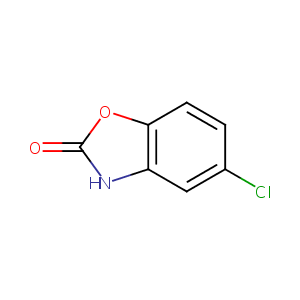
Tetracycline Chlorzoxazone
Indication
Disease Entry Status REF
Chronic myelogenous leukemia Investigative [1]
Component Drugs Tetracycline   DMZA017 Chlorzoxazone   DMCYVDT
Small molecular drug Small molecular drug
2D MOL 2D MOL
3D MOL 3D MOL
High-throughput Screening Result Testing Cell Line: KBM-7
Zero Interaction Potency (ZIP) Score: 3.7
Bliss Independence Score: 3.7
Loewe Additivity Score: 4.43
LHighest Single Agent (HSA) Score: 4.48

Molecular Interaction Atlas of This Drug Combination

Molecular Interaction Atlas (MIA)
Indication(s) of Tetracycline
Disease Entry ICD 11 Status REF
Acne vulgaris ED80 Approved [2]
Actinomycosis N.A. Approved [2]
Acute gonococcal cervicitis N.A. Approved [2]
Acute gonococcal epididymo-orchitis N.A. Approved [2]
Bacterial infection 1A00-1C4Z Approved [3]
Bronchitis CA20 Approved [2]
Brucellosis N.A. Approved [2]
Lymphogranuloma venereum N.A. Approved [2]
Ornithosis N.A. Approved [2]
Pneumonia CA40 Approved [2]
Q fever N.A. Approved [2]
Relapsing fever N.A. Approved [2]
Rickettsialpox N.A. Approved [2]
Rocky mountain spotted fever N.A. Approved [2]
Syphilis N.A. Approved [2]
Trachoma N.A. Approved [2]
Typhus N.A. Approved [2]
Urinary tract infection GC08 Approved [2]
Yaws N.A. Approved [2]
Pelvic inflammatory disease GA05 Investigative [2]
Sinusitis CA0A.Z Investigative [2]
Tetracycline Interacts with 1 DTT Molecule(s)
DTT Name DTT ID UniProt ID Mode of Action REF
Staphylococcus 30S ribosomal subunit (Stap-coc pbp2) TTQ8KVI F4NA87_STAAU Binder [6]
------------------------------------------------------------------------------------
Tetracycline Interacts with 5 DTP Molecule(s)
DTP Name DTP ID UniProt ID Mode of Action REF
P-glycoprotein 1 (ABCB1) DTUGYRD MDR1_HUMAN Substrate [7]
Breast cancer resistance protein (ABCG2) DTI7UX6 ABCG2_HUMAN Substrate [8]
Organic anion transporter 2 (SLC22A7) DT0OC1Q S22A7_HUMAN Substrate [9]
Organic anion transporter 3 (SLC22A8) DTVP67E S22A8_HUMAN Substrate [9]
Organic anion transporter 4 (SLC22A11) DT06JWZ S22AB_HUMAN Substrate [9]
------------------------------------------------------------------------------------
Tetracycline Interacts with 30 DOT Molecule(s)
DOT Name DOT ID UniProt ID Mode of Action REF
Solute carrier family 22 member 7 (SLC22A7) OTKTNH1W S22A7_HUMAN Increases Transport [10]
Organic anion transporter 3 (SLC22A8) OT8BY933 S22A8_HUMAN Increases Uptake [9]
Glutathione S-transferase Mu 3 (GSTM3) OTLA2WJT GSTM3_HUMAN Decreases Activity [11]
Nuclear protein 1 (NUPR1) OT4FU8C0 NUPR1_HUMAN Increases Expression [5]
Alpha-1-antichymotrypsin (SERPINA3) OT9BP2S0 AACT_HUMAN Increases Expression [5]
Inhibin beta E chain (INHBE) OTOI2NYG INHBE_HUMAN Increases Expression [5]
AP-1 complex subunit sigma-1A (AP1S1) OTQ2H8DN AP1S1_HUMAN Decreases Expression [5]
Fibronectin type III domain-containing protein 4 (FNDC4) OTOQK0WK FNDC4_HUMAN Increases Expression [5]
Protein DEPP1 (DEPP1) OTB36PHJ DEPP1_HUMAN Increases Expression [5]
Alternative prion protein (PRNP) OTE85L1Q APRIO_HUMAN Affects Binding [12]
Claudin-11 (CLDN11) OTNN6UTL CLD11_HUMAN Decreases Expression [13]
Stromelysin-1 (MMP3) OTGBI74Z MMP3_HUMAN Decreases Activity [14]
Neutrophil collagenase (MMP8) OTZXH19L MMP8_HUMAN Decreases Activity [14]
Integrin alpha-3 (ITGA3) OTBCH21D ITA3_HUMAN Decreases Expression [13]
Mitogen-activated protein kinase 3 (MAPK3) OTCYKGKO MK03_HUMAN Decreases Phosphorylation [15]
Mitogen-activated protein kinase 1 (MAPK1) OTH85PI5 MK01_HUMAN Decreases Phosphorylation [15]
Collagenase 3 (MMP13) OTY8BZIE MMP13_HUMAN Decreases Activity [14]
Gap junction alpha-8 protein (GJA8) OTZCPRKD CXA8_HUMAN Decreases Expression [13]
Microsomal triglyceride transfer protein large subunit (MTTP) OTNUVSDT MTP_HUMAN Decreases Expression [16]
Claudin-15 (CLDN15) OT9K0KI7 CLD15_HUMAN Decreases Expression [13]
Claudin-8 (CLDN8) OT7IIWXG CLD8_HUMAN Decreases Expression [13]
Claudin-2 (CLDN2) OTRF3D6Y CLD2_HUMAN Decreases Expression [13]
Claudin-10 (CLDN10) OT2CVAKY CLD10_HUMAN Decreases Expression [13]
Peroxisomal bifunctional enzyme (EHHADH) OTBAAHL5 ECHP_HUMAN Decreases Expression [16]
Neurogenic locus notch homolog protein 4 (NOTCH4) OTBCHB61 NOTC4_HUMAN Decreases Expression [13]
Gap junction delta-2 protein (GJD2) OTDR288R CXD2_HUMAN Decreases Expression [13]
Neurogenic locus notch homolog protein 3 (NOTCH3) OTMVVA7F NOTC3_HUMAN Decreases Expression [13]
Solute carrier family 22 member 6 (SLC22A6) OTKRCBVM S22A6_HUMAN Increases Export [9]
ATP-binding cassette sub-family C member 4 (ABCC4) OTO27PAL MRP4_HUMAN Increases Transport [17]
Organic anion transporter 7 (SLC22A9) OTO4BJCC S22A9_HUMAN Increases Export [9]
------------------------------------------------------------------------------------
⏷ Show the Full List of 30 DOT(s)
Indication(s) of Chlorzoxazone
Disease Entry ICD 11 Status REF
Acute pain MG31 Approved [4]
Chlorzoxazone Interacts with 1 DTT Molecule(s)
DTT Name DTT ID UniProt ID Mode of Action REF
Calcium-activated potassium channel (KCN) TTMNI76 NOUNIPROTAC Activator [19]
------------------------------------------------------------------------------------
Chlorzoxazone Interacts with 6 DME Molecule(s)
DME Name DME ID UniProt ID Mode of Action REF
Cytochrome P450 3A4 (CYP3A4) DE4LYSA CP3A4_HUMAN Metabolism [20]
Cytochrome P450 1A2 (CYP1A2) DEJGDUW CP1A2_HUMAN Metabolism [21]
Cytochrome P450 2A6 (CYP2A6) DEJVYAZ CP2A6_HUMAN Metabolism [22]
Cytochrome P450 2D6 (CYP2D6) DECB0K3 CP2D6_HUMAN Metabolism [22]
Cytochrome P450 2E1 (CYP2E1) DEVDYN7 CP2E1_HUMAN Metabolism [23]
Cytochrome P450 102A1 (cyp102) DE4OGUF CPXB_BACMB Metabolism [24]
------------------------------------------------------------------------------------
⏷ Show the Full List of 6 DME(s)
Chlorzoxazone Interacts with 2 DOT Molecule(s)
DOT Name DOT ID UniProt ID Mode of Action REF
Intermediate conductance calcium-activated potassium channel protein 4 (KCNN4) OTQKQ346 KCNN4_HUMAN Increases Activity [25]
Arylamine N-acetyltransferase 2 (NAT2) OTBPDQOY ARY2_HUMAN Affects Metabolism [18]
------------------------------------------------------------------------------------

References

1 CheMBL Affinity Phenotypic Cellular Interaction Assay ID: CHEMBL1125966
2 Tetracycline FDA Label
3 How many modes of action should an antibiotic have Curr Opin Pharmacol. 2008 Oct;8(5):564-73.
4 URL: http://www.guidetopharmacology.org Nucleic Acids Res. 2015 Oct 12. pii: gkv1037. The IUPHAR/BPS Guide to PHARMACOLOGY in 2016: towards curated quantitative interactions between 1300 protein targets and 6000 ligands. (Ligand id: 2322).
5 Determination of phospholipidosis potential based on gene expression analysis in HepG2 cells. Toxicol Sci. 2007 Mar;96(1):101-14.
6 The glycylcyclines: a comparative review with the tetracyclines. Drugs. 2004;64(1):63-88.
7 Mammalian drug efflux transporters of the ATP binding cassette (ABC) family in multidrug resistance: A review of the past decade. Cancer Lett. 2016 Jan 1;370(1):153-64.
8 Arginine-482 is not essential for transport of antibiotics, primary bile acids and unconjugated sterols by the human breast cancer resistance protein (ABCG2). Biochem J. 2005 Jan 15;385(Pt 2):419-26.
9 Human organic anion transporters mediate the transport of tetracycline. Jpn J Pharmacol. 2002 Jan;88(1):69-76.
10 Transport mechanism and substrate specificity of human organic anion transporter 2 (hOat2 [SLC22A7]). J Pharm Pharmacol. 2005 May;57(5):573-8.
11 Inhibition of glutathione S-transferases by antimalarial drugs possible implications for circumventing anticancer drug resistance. Int J Cancer. 2002 Feb 10;97(5):700-5.
12 Tetracycline affects abnormal properties of synthetic PrP peptides and PrP(Sc) in vitro. J Mol Biol. 2000 Jul 28;300(5):1309-22. doi: 10.1006/jmbi.2000.3840.
13 Effects of residual levels of tetracycline on the barrier functions of human intestinal epithelial cells. Food Chem Toxicol. 2017 Nov;109(Pt 1):253-263. doi: 10.1016/j.fct.2017.09.004. Epub 2017 Sep 4.
14 Synthesis and in vitro evaluation of targeted tetracycline derivatives: effects on inhibition of matrix metalloproteinases. Bioorg Med Chem. 2007 Mar 15;15(6):2368-74. doi: 10.1016/j.bmc.2007.01.026. Epub 2007 Jan 19.
15 Increased hepatic Fatty Acid uptake and esterification contribute to tetracycline-induced steatosis in mice. Toxicol Sci. 2015 Jun;145(2):273-82. doi: 10.1093/toxsci/kfv049. Epub 2015 Mar 4.
16 Advantageous use of HepaRG cells for the screening and mechanistic study of drug-induced steatosis. Toxicol Appl Pharmacol. 2016 Jul 1;302:1-9. doi: 10.1016/j.taap.2016.04.007. Epub 2016 Apr 16.
17 Multichannel liquid chromatography-tandem mass spectrometry cocktail method for comprehensive substrate characterization of multidrug resistance-associated protein 4 transporter. Pharm Res. 2007 Dec;24(12):2281-96.
18 Effects of cigarette smoking and carbon monoxide on chlorzoxazone and caffeine metabolism. Clin Pharmacol Ther. 2003 Nov;74(5):468-74. doi: 10.1016/j.clpt.2003.07.001.
19 Chlorzoxazone inhibits contraction of rat thoracic aorta. Eur J Pharmacol. 2006 Sep 18;545(2-3):161-6.
20 Summary of information on human CYP enzymes: human P450 metabolism data. Drug Metab Rev. 2002 Feb-May;34(1-2):83-448.
21 Inhibitory monoclonal antibodies to human cytochrome P450 1A2: analysis of phenacetin O-deethylation in human liver. Pharmacogenetics. 1998 Oct;8(5):375-82.
22 Prediction of human liver microsomal oxidations of 7-ethoxycoumarin and chlorzoxazone with kinetic parameters of recombinant cytochrome P-450 enzymes. Drug Metab Dispos. 1999 Nov;27(11):1274-80.
23 Trimethadione metabolism by human liver cytochrome P450: evidence for the involvement of CYP2E1. Xenobiotica. 1998 Nov;28(11):1041-7.
24 Wild-type CYP102A1 as a biocatalyst: turnover of drugs usually metabolised by human liver enzymes. J Biol Inorg Chem. 2007 Mar;12(3):313-23.
25 Functional and molecular identification of intermediate-conductance Ca(2+)-activated K(+) channels in breast cancer cells: association with cell cycle progression. Am J Physiol Cell Physiol. 2004 Jul;287(1):C125-34. doi: 10.1152/ajpcell.00488.2003. Epub 2004 Feb 25.