General Information of Drug Combination (ID: DCQTG1I)

Drug Combination Name
Trifluridine Imatinib
Indication
Disease Entry Status REF
Pleural epithelioid mesothelioma Investigative [1]
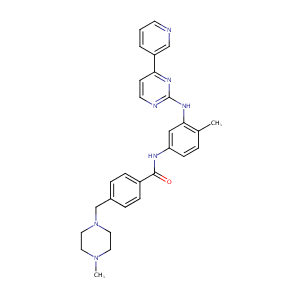
Component Drugs Trifluridine   DMG2YBD Imatinib   DM7RJXL
Small molecular drug Small molecular drug
2D MOL 2D MOL
3D MOL 3D MOL
High-throughput Screening Result Testing Cell Line: NCI-H226
Zero Interaction Potency (ZIP) Score: 7.07
Bliss Independence Score: 8.75
Loewe Additivity Score: 4.61
LHighest Single Agent (HSA) Score: 7.45

Molecular Interaction Atlas of This Drug Combination

Molecular Interaction Atlas (MIA)
Indication(s) of Trifluridine
Disease Entry ICD 11 Status REF
Herpetic keratitis 1F00.10 Approved [2]
Virus infection 1A24-1D9Z Approved [3]
Colon cancer 2B90.Z Investigative [2]
Trifluridine Interacts with 1 DTT Molecule(s)
DTT Name DTT ID UniProt ID Mode of Action REF
Candida Thymidylate synthase (Candi TMP1) TTU6BFZ TYSY_CANAL Inhibitor [11]
------------------------------------------------------------------------------------
Trifluridine Interacts with 4 DTP Molecule(s)
DTP Name DTP ID UniProt ID Mode of Action REF
Organic anion transporter 1 (SLC22A6) DTQ23VB S22A6_HUMAN Substrate [12]
Concentrative nucleoside transporter 1 (SLC28A1) DT0EQPW S28A1_HUMAN Substrate [13]
Equilibrative nucleoside transporter 1 (SLC29A1) DTXD1TQ S29A1_HUMAN Substrate [13]
Equilibrative nucleoside transporter 2 (SLC29A2) DTW78DQ S29A2_HUMAN Substrate [13]
------------------------------------------------------------------------------------
Trifluridine Interacts with 1 DME Molecule(s)
DME Name DME ID UniProt ID Mode of Action REF
Thymidine phosphorylase (TYMP) DE4HCYL TYPH_HUMAN Metabolism [14]
------------------------------------------------------------------------------------
Trifluridine Interacts with 2 DOT Molecule(s)
DOT Name DOT ID UniProt ID Mode of Action REF
Nuclear receptor subfamily 1 group I member 2 (NR1I2) OTC5U0N5 NR1I2_HUMAN Increases Activity [15]
Poly polymerase 1 (PARP1) OT310QSG PARP1_HUMAN Increases Cleavage [16]
------------------------------------------------------------------------------------
Indication(s) of Imatinib
Disease Entry ICD 11 Status REF
Acute lymphoblastic leukaemia 2A85 Approved [4]
Blast phase chronic myelogenous leukemia, BCR-ABL1 positive N.A. Approved [5]
Choroidal neovascularization 9B76 Approved [5]
Chronic eosinophilic leukemia N.A. Approved [5]
Chronic myelogenous leukaemia 2A20.0 Approved [6]
Chronic myeloid leukaemia 2A20 Approved [7]
Dermatofibrosarcoma protuberans N.A. Approved [5]
Gastrointestinal stromal tumour 2B5B Approved [5]
Leukemia N.A. Approved [5]
Malignant peripheral nerve sheath tumor N.A. Approved [5]
Myeloproliferative neoplasm 2A20 Approved [5]
Pulmonary hypertension BB01 Approved [5]
Coronavirus Disease 2019 (COVID-19) 1D6Y Phase 3 [8]
Intestinal cancer 2C0Z Phase 3 [6]
Lung cancer 2C25.0 Phase 2 [6]
Idiopathic hypereosinophilic syndrome N.A. Investigative [5]
Middle East Respiratory Syndrome (MERS) 1D64 Investigative [9]
Scleroderma 4A42 Investigative [5]
Severe acute respiratory syndrome (SARS) 1D65 Investigative [9]
Systemic mastocytosis 2A21.0 Investigative [10]
Imatinib Interacts with 5 DTT Molecule(s)
DTT Name DTT ID UniProt ID Mode of Action REF
Mcl-1 messenger RNA (MCL-1 mRNA) TTN6ORK MCL1_HUMAN . [10]
Fusion protein Bcr-Abl (Bcr-Abl) TTS7G69 BCR_HUMAN-ABL1_HUMAN Inhibitor [20]
Platelet-derived growth factor receptor (PDGFR) TTI2WET NOUNIPROTAC Inhibitor [20]
Tyrosine-protein kinase Kit (KIT) TTX41N9 KIT_HUMAN Inhibitor [20]
HUMAN fusion protein Bcr-Abl (Bcr-Abl) TTE63HY BCR_HUMAN/ABL1_HUMAN Inhibitor [9]
------------------------------------------------------------------------------------
Imatinib Interacts with 6 DTP Molecule(s)
DTP Name DTP ID UniProt ID Mode of Action REF
P-glycoprotein 1 (ABCB1) DTUGYRD MDR1_HUMAN Substrate [21]
Breast cancer resistance protein (ABCG2) DTI7UX6 ABCG2_HUMAN Substrate [22]
Organic anion transporting polypeptide 1B1 (SLCO1B1) DT3D8F0 SO1B1_HUMAN Substrate [23]
Organic cation transporter 1 (SLC22A1) DTT79CX S22A1_HUMAN Substrate [24]
Organic anion transporting polypeptide 1A2 (SLCO1A2) DTE2B1D SO1A2_HUMAN Substrate [25]
Organic anion transporting polypeptide 1B3 (SLCO1B3) DT9C1TS SO1B3_HUMAN Substrate [23]
------------------------------------------------------------------------------------
⏷ Show the Full List of 6 DTP(s)
Imatinib Interacts with 8 DME Molecule(s)
DME Name DME ID UniProt ID Mode of Action REF
Cytochrome P450 3A4 (CYP3A4) DE4LYSA CP3A4_HUMAN Metabolism [26]
Cytochrome P450 1A2 (CYP1A2) DEJGDUW CP1A2_HUMAN Metabolism [27]
Cytochrome P450 2D6 (CYP2D6) DECB0K3 CP2D6_HUMAN Metabolism [28]
Cytochrome P450 3A5 (CYP3A5) DEIBDNY CP3A5_HUMAN Metabolism [29]
Cytochrome P450 3A7 (CYP3A7) DERD86B CP3A7_HUMAN Metabolism [30]
Cytochrome P450 2C8 (CYP2C8) DES5XRU CP2C8_HUMAN Metabolism [31]
Cytochrome P450 2C9 (CYP2C9) DE5IED8 CP2C9_HUMAN Metabolism [32]
Prostaglandin G/H synthase 1 (COX-1) DE073H6 PGH1_HUMAN Metabolism [28]
------------------------------------------------------------------------------------
⏷ Show the Full List of 8 DME(s)
Imatinib Interacts with 48 DOT Molecule(s)
DOT Name DOT ID UniProt ID Mode of Action REF
Broad substrate specificity ATP-binding cassette transporter ABCG2 (ABCG2) OTW8V2V1 ABCG2_HUMAN Increases Expression [33]
ATP-dependent translocase ABCB1 (ABCB1) OTEJROBO MDR1_HUMAN Increases Expression [33]
Aldehyde dehydrogenase, mitochondrial (ALDH2) OTKJ9I3N ALDH2_HUMAN Decreases Expression [34]
Eukaryotic translation initiation factor 4E (EIF4E) OTDAWNLA IF4E_HUMAN Decreases Expression [34]
Fructose-bisphosphate aldolase C (ALDOC) OTEC13I5 ALDOC_HUMAN Decreases Expression [34]
Pyruvate dehydrogenase E1 component subunit beta, mitochondrial (PDHB) OT2NHE5E ODPB_HUMAN Decreases Expression [34]
Eukaryotic translation initiation factor 4B (EIF4B) OTE8TXA8 IF4B_HUMAN Decreases Expression [34]
Phosphatidylinositol 3-kinase regulatory subunit alpha (PIK3R1) OT5BZ1J9 P85A_HUMAN Decreases Expression [34]
G1/S-specific cyclin-D3 (CCND3) OTNKPQ22 CCND3_HUMAN Decreases Expression [34]
Hexokinase-4 (GCK) OTR3Q0NN HXK4_HUMAN Decreases Expression [34]
Serine/threonine-protein phosphatase 2A catalytic subunit alpha isoform (PPP2CA) OT83PT85 PP2AA_HUMAN Increases Expression [34]
Bile salt export pump (ABCB11) OTRU7THO ABCBB_HUMAN Decreases Activity [35]
Tumor necrosis factor receptor superfamily member 10B (TNFRSF10B) OTA1CPBV TR10B_HUMAN Increases Expression [36]
Autophagy-related protein 13 (ATG13) OTYMHNEJ ATG13_HUMAN Increases Phosphorylation [17]
Keratin, type I cytoskeletal 14 (KRT14) OTUVZ1DW K1C14_HUMAN Increases Expression [37]
Heat shock protein beta-1 (HSPB1) OTHFZ8ED HSPB1_HUMAN Increases Expression [36]
Tyrosine-protein kinase Lck (LCK) OT883FG9 LCK_HUMAN Decreases Phosphorylation [38]
ATP-dependent 6-phosphofructokinase, muscle type (PFKM) OT1QY9JM PFKAM_HUMAN Decreases Expression [39]
Poly polymerase 1 (PARP1) OT310QSG PARP1_HUMAN Increases Cleavage [40]
Interleukin-8 (CXCL8) OTS7T5VH IL8_HUMAN Increases Expression [36]
Solute carrier family 2, facilitated glucose transporter member 1 (SLC2A1) OTA675TJ GTR1_HUMAN Decreases Expression [41]
Keratin, type II cytoskeletal 5 (KRT5) OTVGI9HT K2C5_HUMAN Increases Expression [37]
Histone H2AX (H2AX) OT18UX57 H2AX_HUMAN Increases Expression [42]
Transcription factor EB (TFEB) OTJUJJQY TFEB_HUMAN Affects Localization [17]
Insulin-like growth factor-binding protein 4 (IGFBP4) OT2HZRBD IBP4_HUMAN Increases Expression [36]
Interleukin-4 receptor subunit alpha (IL4R) OTTXOTCW IL4RA_HUMAN Increases Expression [36]
Mitogen-activated protein kinase 3 (MAPK3) OTCYKGKO MK03_HUMAN Decreases Phosphorylation [38]
Mitogen-activated protein kinase 1 (MAPK1) OTH85PI5 MK01_HUMAN Decreases Phosphorylation [38]
Catenin beta-1 (CTNNB1) OTZ932A3 CTNB1_HUMAN Decreases Expression [43]
Crk-like protein (CRKL) OTOYSD1R CRKL_HUMAN Decreases Phosphorylation [44]
Small ribosomal subunit protein eS6 (RPS6) OTT4D1LN RS6_HUMAN Decreases Phosphorylation [17]
Heat shock factor protein 1 (HSF1) OTYNJ4KP HSF1_HUMAN Increases Expression [36]
Transcription factor p65 (RELA) OTUJP9CN TF65_HUMAN Decreases Expression [43]
Bcl-2-like protein 1 (BCL2L1) OTRC5K9O B2CL1_HUMAN Decreases Expression [45]
Nuclear receptor subfamily 0 group B member 2 (NR0B2) OT7UVICX NR0B2_HUMAN Increases Expression [46]
NGFI-A-binding protein 2 (NAB2) OTG4BDF3 NAB2_HUMAN Increases Expression [36]
TRAF family member-associated NF-kappa-B activator (TANK) OTZSGFIK TANK_HUMAN Increases Expression [36]
NACHT, LRR and PYD domains-containing protein 3 (NLRP3) OTZM6MHU NLRP3_HUMAN Increases Expression [47]
Bile acid receptor (NR1H4) OTWZLPTB NR1H4_HUMAN Increases Activity [46]
Docking protein 1 (DOK1) OTGVRLW6 DOK1_HUMAN Decreases Phosphorylation [48]
Microtubule-associated proteins 1A/1B light chain 3B (MAP1LC3B) OTUYHB84 MLP3B_HUMAN Increases Expression [17]
Transcription factor SOX-17 (SOX17) OT9H4WWE SOX17_HUMAN Decreases Localization [49]
V-type proton ATPase subunit H (ATP6V1H) OTX17GQ9 VATH_HUMAN Increases Expression [17]
LYR motif-containing protein 9 (LYRM9) OT1MILTK LYRM9_HUMAN Affects Response To Substance [50]
Baculoviral IAP repeat-containing protein 5 (BIRC5) OTILXZYL BIRC5_HUMAN Decreases Response To Substance [51]
Bcl-2-like protein 11 (BCL2L11) OTNQQWFJ B2L11_HUMAN Increases Response To Substance [52]
Tyrosine-protein kinase Lyn (LYN) OTP686K2 LYN_HUMAN Decreases Response To Substance [44]
Serine/threonine-protein kinase PLK1 (PLK1) OTRZX45T PLK1_HUMAN Increases Response To Substance [40]
------------------------------------------------------------------------------------
⏷ Show the Full List of 48 DOT(s)

Test Results of This Drug Combination in Other Disease Systems

Indication DrugCom ID Cell Line Status REF
Invasive ductal carcinoma DCWI7AF T-47D Investigative [53]
Cutaneous melanoma DC9FKWD SK-MEL-28 Investigative [1]
Melanoma DC83XHG MALME-3M Investigative [1]
Minimally invasive lung adenocarcinoma DC4O7TX NCI-H322M Investigative [1]
------------------------------------------------------------------------------------

References

1 CheMBL Affinity Phenotypic Cellular Interaction Assay ID: CHEMBL1125976
2 Trifluridine FDA Label
3 URL: http://www.guidetopharmacology.org Nucleic Acids Res. 2015 Oct 12. pii: gkv1037. The IUPHAR/BPS Guide to PHARMACOLOGY in 2016: towards curated quantitative interactions between 1300 protein targets and 6000 ligands. (Ligand id: 8697).
4 Drugs@FDA. U.S. Food and Drug Administration. U.S. Department of Health & Human Services. 2015
5 Imatinib FDA Label
6 URL: http://www.guidetopharmacology.org Nucleic Acids Res. 2015 Oct 12. pii: gkv1037. The IUPHAR/BPS Guide to PHARMACOLOGY in 2016: towards curated quantitative interactions between 1300 protein targets and 6000 ligands. (Ligand id: 5687).
7 FDA Approved Drug Products from FDA Official Website. 2019. Application Number: (ANDA) 078340.
8 ClinicalTrials.gov (NCT04356495) Treatments to Decrease the Risk of Hospitalization or Death in Elderly Outpatients With Symptomatic SARS-CoV-2 Infection (COVID-19). U.S. National Institutes of Health.
9 Coronaviruses - drug discovery and therapeutic options. Nat Rev Drug Discov. 2016 May;15(5):327-47.
10 Design and development of antisense drugs. Expert Opin. Drug Discov. 2008 3(10):1189-1207.
11 Trifluorothymidine induces cell death independently of p53. Nucleosides Nucleotides Nucleic Acids. 2008 Jun;27(6):699-703.
12 Rat multispecific organic anion transporter 1 (rOAT1) transports zidovudine, acyclovir, and other antiviral nucleoside analogs. J Pharmacol Exp Ther. 2000 Sep;294(3):844-9.
13 Lonsurf, INN-trifluridine/tipiracil.
14 Phase I clinical study of three times a day oral administration of TAS-102 in patients with solid tumors. Cancer Invest. 2008 Oct;26(8):794-9.
15 Screening of a chemical library reveals novel PXR-activating pharmacologic compounds. Toxicol Lett. 2015 Jan 5;232(1):193-202. doi: 10.1016/j.toxlet.2014.10.009. Epub 2014 Oct 16.
16 Differential activation of cell death and autophagy results in an increased cytotoxic potential for trifluorothymidine compared to 5-fluorouracil in colon cancer cells. Int J Cancer. 2010 May 15;126(10):2457-68. doi: 10.1002/ijc.24943.
17 Imatinib disturbs lysosomal function and morphology and impairs the activity of mTORC1 in human hepatocyte cell lines. Food Chem Toxicol. 2022 Apr;162:112869. doi: 10.1016/j.fct.2022.112869. Epub 2022 Feb 16.
18 Insulin-like growth factor I receptor pathway inhibition by ADW742, alone or in combination with imatinib, doxorubicin, or vincristine, is a novel therapeutic approach in Ewing tumor. Clin Cancer Res. 2006 Jun 1;12(11 Pt 1):3532-40. doi: 10.1158/1078-0432.CCR-05-1778.
19 Sensitivity to imatinib therapy may be predicted by testing Wilms tumor gene expression and colony growth after a short in vitro incubation. Cancer. 2004 Sep 1;101(5):979-88. doi: 10.1002/cncr.20457.
20 A comparison of physicochemical property profiles of marketed oral drugs and orally bioavailable anti-cancer protein kinase inhibitors in clinical development. Curr Top Med Chem. 2007;7(14):1408-22.
21 Association of genetic polymorphisms in the influx transporter SLCO1B3 and the efflux transporter ABCB1 with imatinib pharmacokinetics in patients with chronic myeloid leukemia. Ther Drug Monit. 2011 Apr;33(2):244-50.
22 Imatinib mesylate (STI571) is a substrate for the breast cancer resistance protein (BCRP)/ABCG2 drug pump. Blood. 2004 Nov 1;104(9):2940-2.
23 Contribution of OATP1B1 and OATP1B3 to the disposition of sorafenib and sorafenib-glucuronide. Clin Cancer Res. 2013 Mar 15;19(6):1458-66.
24 Pharmacologic markers and predictors of responses to imatinib therapy in patients with chronic myeloid leukemia. Leuk Lymphoma. 2008 Apr;49(4):639-42.
25 Environmental and genetic factors affecting transport of imatinib by OATP1A2. Clin Pharmacol Ther. 2011 Jun;89(6):816-20.
26 Potent mechanism-based inhibition of CYP3A4 by imatinib explains its liability to interact with CYP3A4 substrates. Br J Pharmacol. 2012 Apr;165(8):2787-98.
27 The effect of apigenin on pharmacokinetics of imatinib and its metabolite N-desmethyl imatinib in rats. Biomed Res Int. 2013;2013:789184.
28 Substrates, inducers, inhibitors and structure-activity relationships of human Cytochrome P450 2C9 and implications in drug development. Curr Med Chem. 2009;16(27):3480-675.
29 Clinical pharmacokinetics of imatinib. Clin Pharmacokinet. 2005;44(9):879-94.
30 Drug Interactions Flockhart Table
31 Role of cytochrome P450 2C8 in drug metabolism and interactions. Pharmacol Rev. 2016 Jan;68(1):168-241.
32 Drug-drug interactions with imatinib: an observational study. Medicine (Baltimore). 2016 Oct;95(40):e5076.
33 Chronic imatinib mesylate exposure leads to reduced intracellular drug accumulation by induction of the ABCG2 (BCRP) and ABCB1 (MDR1) drug transport pumps. Cancer Biol Ther. 2005 Jul;4(7):747-52.
34 A systems biology understanding of the synergistic effects of arsenic sulfide and Imatinib in BCR/ABL-associated leukemia. Proc Natl Acad Sci U S A. 2009 Mar 3;106(9):3378-83.
35 Interference with bile salt export pump function is a susceptibility factor for human liver injury in drug development. Toxicol Sci. 2010 Dec; 118(2):485-500.
36 Effects of Imatinib Mesylate (Gleevec) on human islet NF-kappaB activation and chemokine production in vitro. PLoS One. 2011;6(9):e24831. doi: 10.1371/journal.pone.0024831. Epub 2011 Sep 14.
37 Oral lichenoid eruption secondary to imatinib (Glivec). J Dermatolog Treat. 2004 Jul;15(4):253-5. doi: 10.1080/09546630410015556.
38 Imatinib mesylate inhibits T-cell proliferation in vitro and delayed-type hypersensitivity in vivo. Blood. 2004 Aug 15;104(4):1094-9. doi: 10.1182/blood-2003-12-4266. Epub 2004 Apr 20.
39 Combination of imatinib and clotrimazole enhances cell growth inhibition in T47D breast cancer cells. Chem Biol Interact. 2015 May 25;233:147-56. doi: 10.1016/j.cbi.2015.03.028. Epub 2015 Apr 8.
40 Efficacy of the polo-like kinase inhibitor rigosertib, alone or in combination with Abelson tyrosine kinase inhibitors, against break point cluster region-c-Abelson-positive leukemia cells. Oncotarget. 2015 Aug 21;6(24):20231-40. doi: 10.18632/oncotarget.4047.
41 AMP-activated protein kinase activation primes cytoplasmic translocation and autophagic degradation of the BCR-ABL protein in CML cells. Cancer Sci. 2021 Jan;112(1):194-204. doi: 10.1111/cas.14698. Epub 2020 Nov 16.
42 Proapoptotic activity of bortezomib in gastrointestinal stromal tumor cells. Cancer Res. 2010 Jan 1;70(1):150-9. doi: 10.1158/0008-5472.CAN-09-1449. Epub 2009 Dec 22.
43 Anthelmintic Niclosamide Disrupts the Interplay of p65 and FOXM1/-catenin and Eradicates Leukemia Stem Cells in Chronic Myelogenous Leukemia. Clin Cancer Res. 2017 Feb 1;23(3):789-803. doi: 10.1158/1078-0432.CCR-16-0226. Epub 2016 Aug 4.
44 Establishment and characterization of a novel imatinib-sensitive chronic myeloid leukemia cell line MYL, and an imatinib-resistant subline MYL-R showing overexpression of Lyn. Eur J Haematol. 2007 May;78(5):417-31. doi: 10.1111/j.1600-0609.2007.00835.x.
45 The catalytic DNA topoisomerase II inhibitor dexrazoxane (ICRF-187) induces differentiation and apoptosis in human leukemia K562 cells. Mol Pharmacol. 2001 Mar;59(3):453-61. doi: 10.1124/mol.59.3.453.
46 Investigation of imatinib and other approved drugs as starting points for antidiabetic drug discovery with FXR modulating activity. Biochem Pharmacol. 2012 Jun 15;83(12):1674-81. doi: 10.1016/j.bcp.2012.02.027. Epub 2012 Mar 7.
47 Imatinib-induced hepatotoxicity via oxidative stress and activation of NLRP3 inflammasome: an in vitro and in vivo study. Arch Toxicol. 2022 Apr;96(4):1075-1087. doi: 10.1007/s00204-022-03245-x. Epub 2022 Feb 22.
48 Sorafenib induces apoptosis specifically in cells expressing BCR/ABL by inhibiting its kinase activity to activate the intrinsic mitochondrial pathway. Cancer Res. 2009 May 1;69(9):3927-36. doi: 10.1158/0008-5472.CAN-08-2978. Epub 2009 Apr 14.
49 A high-throughput screen for teratogens using human pluripotent stem cells. Toxicol Sci. 2014 Jan;137(1):76-90. doi: 10.1093/toxsci/kft239. Epub 2013 Oct 23.
50 Identification of Genes That Modulate Susceptibility to Formaldehyde and Imatinib by Functional Genomic Screening in Human Haploid KBM7 Cells. Toxicol Sci. 2016 May;151(1):10-22. doi: 10.1093/toxsci/kfw032. Epub 2016 Mar 22.
51 Disruption of the inhibitor of apoptosis protein survivin sensitizes Bcr-abl-positive cells to STI571-induced apoptosis. Cancer Res. 2005 Sep 15;65(18):8224-32. doi: 10.1158/0008-5472.CAN-05-0303.
52 Epigenetic down-regulation of BIM expression is associated with reduced optimal responses to imatinib treatment in chronic myeloid leukaemia. Eur J Cancer. 2009 Jul;45(10):1877-89. doi: 10.1016/j.ejca.2009.04.005. Epub 2009 May 4.
53 CheMBL Affinity Phenotypic Cellular Interaction Assay ID: CHEMBL1126165