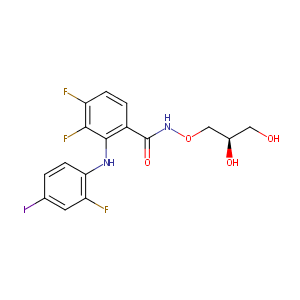
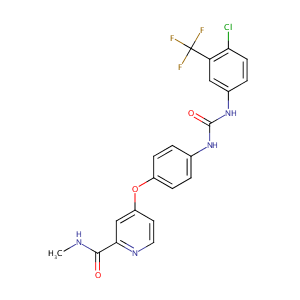
General Information of Drug Combination (ID: DCSZVM9)

Drug Combination Name
PD-0325901 Sorafenib
Indication
Disease Entry Status REF
Ovarian serous cystadenocarcinoma Investigative [1]
Component Drugs PD-0325901   DM27D4J Sorafenib   DMS8IFC
Small molecular drug Small molecular drug
2D MOL 2D MOL
3D MOL 3D MOL
High-throughput Screening Result Testing Cell Line: SK-OV-3
Zero Interaction Potency (ZIP) Score: 12.71
Bliss Independence Score: 12.8
Loewe Additivity Score: 5.17
LHighest Single Agent (HSA) Score: 13.13

Molecular Interaction Atlas of This Drug Combination

Molecular Interaction Atlas (MIA)
Indication(s) of PD-0325901
Disease Entry ICD 11 Status REF
Breast cancer 2C60-2C65 Phase 2 [2]
PD-0325901 Interacts with 1 DTT Molecule(s)
DTT Name DTT ID UniProt ID Mode of Action REF
MAPK/ERK kinase kinase (MAP3K) TTROQ37 NOUNIPROTAC Modulator [6]
------------------------------------------------------------------------------------
PD-0325901 Interacts with 62 DOT Molecule(s)
DOT Name DOT ID UniProt ID Mode of Action REF
Nuclear receptor subfamily 0 group B member 2 (NR0B2) OT7UVICX NR0B2_HUMAN Decreases Expression [7]
T-box transcription factor TBX3 (TBX3) OTM64N7K TBX3_HUMAN Decreases Expression [5]
Protein sprouty homolog 2 (SPRY2) OTH0CRCZ SPY2_HUMAN Decreases Expression [5]
Leupaxin (LPXN) OTUNV3CK LPXN_HUMAN Decreases Expression [5]
PR domain zinc finger protein 1 (PRDM1) OTQLSVBS PRDM1_HUMAN Decreases Expression [5]
Tumor necrosis factor ligand superfamily member 15 (TNFSF15) OTNGA2BW TNF15_HUMAN Decreases Expression [5]
Integrin beta-like protein 1 (ITGBL1) OTJDHE17 ITGBL_HUMAN Decreases Expression [5]
Interstitial collagenase (MMP1) OTI4I2V1 MMP1_HUMAN Decreases Expression [5]
Glycophorin-C (GYPC) OTOEDR7O GLPC_HUMAN Decreases Expression [5]
Growth-regulated alpha protein (CXCL1) OT3WCTZV GROA_HUMAN Decreases Expression [5]
Interleukin-8 (CXCL8) OTS7T5VH IL8_HUMAN Decreases Expression [5]
Mast/stem cell growth factor receptor Kit (KIT) OTHUY3VZ KIT_HUMAN Decreases Expression [5]
Protein-glutamine gamma-glutamyltransferase 2 (TGM2) OT6MFOWF TGM2_HUMAN Decreases Expression [5]
Pentraxin-related protein PTX3 (PTX3) OTPXHRKU PTX3_HUMAN Decreases Expression [5]
5-hydroxytryptamine receptor 7 (HTR7) OT44DEWB 5HT7R_HUMAN Decreases Expression [5]
17-beta-hydroxysteroid dehydrogenase type 2 (HSD17B2) OT3K7HY5 DHB2_HUMAN Decreases Expression [5]
ETS translocation variant 5 (ETV5) OTE2OBM4 ETV5_HUMAN Decreases Expression [5]
ETS translocation variant 4 (ETV4) OT8C98UZ ETV4_HUMAN Decreases Expression [5]
Transcription factor SOX-9 (SOX9) OTVDJFGN SOX9_HUMAN Decreases Expression [5]
ETS translocation variant 1 (ETV1) OT6PMJIK ETV1_HUMAN Decreases Expression [5]
Paired mesoderm homeobox protein 1 (PRRX1) OTTZK5G8 PRRX1_HUMAN Decreases Expression [5]
Epithelial membrane protein 1 (EMP1) OTSZHUHQ EMP1_HUMAN Decreases Expression [5]
Forkhead box protein G1 (FOXG1) OTAW57J4 FOXG1_HUMAN Decreases Expression [5]
ADP-ribosylation factor-like protein 4C (ARL4C) OTQ3QNNU ARL4C_HUMAN Decreases Expression [5]
Reelin (RELN) OTLKMW1O RELN_HUMAN Decreases Expression [5]
C-C motif chemokine 20 (CCL20) OTUCJY4N CCL20_HUMAN Decreases Expression [5]
A-kinase anchor protein 12 (AKAP12) OTCVRDDX AKA12_HUMAN Decreases Expression [5]
Dual specificity protein phosphatase 4 (DUSP4) OT6WAO12 DUS4_HUMAN Decreases Expression [5]
Monocyte to macrophage differentiation factor (MMD) OTB5I4OC PAQRB_HUMAN Decreases Expression [5]
Syntaxin-1A (STX1A) OTSBUZB4 STX1A_HUMAN Decreases Expression [5]
Dual specificity protein phosphatase 6 (DUSP6) OT4H6RKW DUS6_HUMAN Decreases Expression [5]
Kinesin-like protein KIF24 (KIF24) OTJTA5V3 KIF24_HUMAN Decreases Expression [5]
Anoctamin-1 (ANO1) OTSREUNI ANO1_HUMAN Decreases Expression [5]
NADH-cytochrome b5 reductase 2 (CYB5R2) OTTLM7XN NB5R2_HUMAN Decreases Expression [5]
Dynamin-binding protein (DNMBP) OTMHH14H DNMBP_HUMAN Decreases Expression [5]
Sialic acid-binding Ig-like lectin 15 (SIGLEC15) OTON4K9S SIG15_HUMAN Decreases Expression [5]
UPF0606 protein KIAA1549L (KIAA1549L) OT80HUVY K154L_HUMAN Decreases Expression [5]
Neuron navigator 3 (NAV3) OT97M1TR NAV3_HUMAN Decreases Expression [5]
Dedicator of cytokinesis protein 4 (DOCK4) OTH3XY8B DOCK4_HUMAN Decreases Expression [5]
Transmembrane protein 156 (TMEM156) OTH7YJID TM156_HUMAN Decreases Expression [5]
Tribbles homolog 2 (TRIB2) OTHSX3MX TRIB2_HUMAN Decreases Expression [5]
Hyaluronan synthase 2 (HAS2) OTTD3PAL HYAS2_HUMAN Decreases Expression [5]
Neuronal cell adhesion molecule (NRCAM) OT80HHQ2 NRCAM_HUMAN Decreases Expression [5]
Discoidin, CUB and LCCL domain-containing protein 2 (DCBLD2) OTB71I02 DCBD2_HUMAN Decreases Expression [5]
Formin-like protein 2 (FMNL2) OT9OVWCV FMNL2_HUMAN Decreases Expression [5]
Paternally-expressed gene 3 protein (PEG3) OTHQW98S PEG3_HUMAN Decreases Expression [5]
Disintegrin and metalloproteinase domain-containing protein 19 (ADAM19) OTH88TXU ADA19_HUMAN Decreases Expression [5]
Endothelial cell-specific molecule 1 (ESM1) OT331Y8V ESM1_HUMAN Decreases Expression [5]
Interleukin-1 receptor accessory protein-like 1 (IL1RAPL1) OTW3T4B2 IRPL1_HUMAN Decreases Expression [5]
Neurotrimin (NTM) OTHF0UQU NTRI_HUMAN Decreases Expression [5]
Type 2 lactosamine alpha-2,3-sialyltransferase (ST3GAL6) OTB17Q43 SIA10_HUMAN Decreases Expression [5]
Bcl-2-like protein 11 (BCL2L11) OTNQQWFJ B2L11_HUMAN Increases Expression [8]
Forkhead box protein O3 (FOXO3) OTHXQG4P FOXO3_HUMAN Increases Expression [9]
Myc proto-oncogene protein (MYC) OTPV5LUK MYC_HUMAN Decreases Expression [10]
DNA excision repair protein ERCC-1 (ERCC1) OTNPYQHI ERCC1_HUMAN Decreases Expression [11]
Poly polymerase 1 (PARP1) OT310QSG PARP1_HUMAN Increases Cleavage [12]
Mitogen-activated protein kinase 3 (MAPK3) OTCYKGKO MK03_HUMAN Decreases Phosphorylation [13]
Mitogen-activated protein kinase 1 (MAPK1) OTH85PI5 MK01_HUMAN Decreases Phosphorylation [13]
Small ribosomal subunit protein eS6 (RPS6) OTT4D1LN RS6_HUMAN Decreases Phosphorylation [14]
Heat shock factor protein 1 (HSF1) OTYNJ4KP HSF1_HUMAN Decreases Activity [15]
Bcl-2 homologous antagonist/killer (BAK1) OTDP6ILW BAK_HUMAN Increases Expression [12]
DNA repair endonuclease XPF (ERCC4) OTFIOPG1 XPF_HUMAN Increases Expression [11]
------------------------------------------------------------------------------------
⏷ Show the Full List of 62 DOT(s)
Indication(s) of Sorafenib
Disease Entry ICD 11 Status REF
Adenocarcinoma 2D40 Approved [3]
Carcinoma 2A00-2F9Z Approved [3]
Clear cell renal carcinoma N.A. Approved [3]
Lung cancer 2C25.0 Approved [3]
Medullary thyroid gland carcinoma N.A. Approved [3]
Non-small-cell lung cancer 2C25.Y Approved [3]
Renal cell carcinoma 2C90 Approved [4]
Thyroid cancer 2D10 Approved [3]
Hepatocellular carcinoma 2C12.02 Phase 3 [4]
Myelodysplastic syndrome 2A37 Phase 2 [4]
Sorafenib Interacts with 4 DTT Molecule(s)
DTT Name DTT ID UniProt ID Mode of Action REF
Tyrosine-protein kinase Kit (KIT) TTX41N9 KIT_HUMAN Modulator [21]
Platelet-derived growth factor receptor beta (PDGFRB) TTI7421 PGFRB_HUMAN Modulator [21]
Epidermal growth factor receptor (EGFR) TTGKNB4 EGFR_HUMAN Inhibitor [22]
Vascular endothelial growth factor receptor 2 (KDR) TTUTJGQ VGFR2_HUMAN Modulator [21]
------------------------------------------------------------------------------------
Sorafenib Interacts with 7 DTP Molecule(s)
DTP Name DTP ID UniProt ID Mode of Action REF
Multidrug resistance-associated protein 2 (ABCC2) DTFI42L MRP2_HUMAN Substrate [23]
P-glycoprotein 1 (ABCB1) DTUGYRD MDR1_HUMAN Substrate [24]
Breast cancer resistance protein (ABCG2) DTI7UX6 ABCG2_HUMAN Substrate [25]
Organic anion transporting polypeptide 1B1 (SLCO1B1) DT3D8F0 SO1B1_HUMAN Substrate [26]
Organic cation transporter 1 (SLC22A1) DTT79CX S22A1_HUMAN Substrate [27]
Organic anion transporting polypeptide 1B3 (SLCO1B3) DT9C1TS SO1B3_HUMAN Substrate [26]
RalBP1-associated Eps domain-containing protein 2 (RALBP1) DTYEM9B REPS2_HUMAN Substrate [28]
------------------------------------------------------------------------------------
⏷ Show the Full List of 7 DTP(s)
Sorafenib Interacts with 6 DME Molecule(s)
DME Name DME ID UniProt ID Mode of Action REF
Cytochrome P450 3A4 (CYP3A4) DE4LYSA CP3A4_HUMAN Metabolism [29]
Cytochrome P450 1A2 (CYP1A2) DEJGDUW CP1A2_HUMAN Metabolism [30]
Cytochrome P450 3A5 (CYP3A5) DEIBDNY CP3A5_HUMAN Metabolism [31]
Cytochrome P450 3A7 (CYP3A7) DERD86B CP3A7_HUMAN Metabolism [31]
Cytochrome P450 2C8 (CYP2C8) DES5XRU CP2C8_HUMAN Metabolism [29]
UDP-glucuronosyltransferase 1A9 (UGT1A9) DE85D2P UD19_HUMAN Metabolism [32]
------------------------------------------------------------------------------------
⏷ Show the Full List of 6 DME(s)
Sorafenib Interacts with 63 DOT Molecule(s)
DOT Name DOT ID UniProt ID Mode of Action REF
Mast/stem cell growth factor receptor Kit (KIT) OTHUY3VZ KIT_HUMAN Decreases Phosphorylation [33]
DNA damage-inducible transcript 3 protein (DDIT3) OTI8YKKE DDIT3_HUMAN Increases Expression [34]
DNA damage-inducible transcript 4 protein (DDIT4) OTHY8SY4 DDIT4_HUMAN Increases Expression [34]
Bile salt export pump (ABCB11) OTRU7THO ABCBB_HUMAN Decreases Activity [35]
Mitogen-activated protein kinase 3 (MAPK3) OTCYKGKO MK03_HUMAN Decreases Activity [36]
Mitogen-activated protein kinase 1 (MAPK1) OTH85PI5 MK01_HUMAN Decreases Activity [36]
Phosphatidylinositol 4-phosphate 3-kinase C2 domain-containing subunit alpha (PIK3C2A) OTFBU4GD P3C2A_HUMAN Decreases Expression [16]
Baculoviral IAP repeat-containing protein 5 (BIRC5) OTILXZYL BIRC5_HUMAN Decreases Expression [16]
Phosphatidylinositol 4,5-bisphosphate 3-kinase catalytic subunit alpha isoform (PIK3CA) OTTOMI8J PK3CA_HUMAN Decreases Expression [16]
Growth factor receptor-bound protein 2 (GRB2) OTOP7LTE GRB2_HUMAN Decreases Expression [16]
Interferon regulatory factor 5 (IRF5) OT8SIIAP IRF5_HUMAN Increases Expression [16]
Serine/threonine-protein kinase PLK3 (PLK3) OT19CT2Z PLK3_HUMAN Increases Expression [16]
Serine/threonine-protein kinase PLK2 (PLK2) OTKMJXJ8 PLK2_HUMAN Increases Expression [16]
Tumor necrosis factor receptor superfamily member 10B (TNFRSF10B) OTA1CPBV TR10B_HUMAN Increases Expression [34]
CASP8 and FADD-like apoptosis regulator (CFLAR) OTX14BAS CFLAR_HUMAN Decreases Expression [37]
Bcl-2-like protein 11 (BCL2L11) OTNQQWFJ B2L11_HUMAN Decreases Expression [38]
Zinc finger protein SNAI2 (SNAI2) OT7Y8EJ2 SNAI2_HUMAN Decreases Expression [17]
E3 ubiquitin-protein ligase parkin (PRKN) OTJBN41W PRKN_HUMAN Increases Ubiquitination [39]
Growth arrest and DNA damage-inducible protein GADD45 beta (GADD45B) OTL9I7LO GA45B_HUMAN Increases Expression [40]
Protein phosphatase 1 regulatory subunit 15A (PPP1R15A) OTYG179K PR15A_HUMAN Increases Expression [18]
Growth arrest and DNA damage-inducible protein GADD45 gamma (GADD45G) OT8V1J4M GA45G_HUMAN Increases Expression [41]
Apoptosis-inducing factor 1, mitochondrial (AIFM1) OTKPWB7Q AIFM1_HUMAN Affects Localization [38]
Transforming growth factor beta-1 proprotein (TGFB1) OTV5XHVH TGFB1_HUMAN Decreases Activity [42]
RAF proto-oncogene serine/threonine-protein kinase (RAF1) OT51LSFO RAF1_HUMAN Decreases Activity [33]
Transcription factor Jun (JUN) OTCYBO6X JUN_HUMAN Increases Expression [40]
Tyrosine-protein kinase Lck (LCK) OT883FG9 LCK_HUMAN Decreases Phosphorylation [43]
Retinoblastoma-associated protein (RB1) OTQJUJMZ RB_HUMAN Decreases Expression [44]
Eukaryotic translation initiation factor 4E (EIF4E) OTDAWNLA IF4E_HUMAN Decreases Phosphorylation [38]
Poly polymerase 1 (PARP1) OT310QSG PARP1_HUMAN Increases Cleavage [45]
Cadherin-1 (CDH1) OTFJMXPM CADH1_HUMAN Increases Expression [17]
Proto-oncogene tyrosine-protein kinase Src (SRC) OTETYX40 SRC_HUMAN Decreases Activity [46]
Cyclic AMP-dependent transcription factor ATF-4 (ATF4) OTRFV19J ATF4_HUMAN Increases Expression [34]
G1/S-specific cyclin-D2 (CCND2) OTDULQF9 CCND2_HUMAN Decreases Expression [47]
G1/S-specific cyclin-D3 (CCND3) OTNKPQ22 CCND3_HUMAN Decreases Expression [48]
Mitogen-activated protein kinase 8 (MAPK8) OTEREYS5 MK08_HUMAN Decreases Phosphorylation [49]
Mitogen-activated protein kinase 9 (MAPK9) OTCEVJ9E MK09_HUMAN Decreases Phosphorylation [49]
Dual specificity mitogen-activated protein kinase kinase 4 (MAP2K4) OTZPZX11 MP2K4_HUMAN Decreases Phosphorylation [49]
Crk-like protein (CRKL) OTOYSD1R CRKL_HUMAN Decreases Phosphorylation [50]
Cyclin-dependent kinase inhibitor 1B (CDKN1B) OTNY5LLZ CDN1B_HUMAN Increases Expression [51]
CCAAT/enhancer-binding protein delta (CEBPD) OTNBIPMY CEBPD_HUMAN Increases Expression [41]
Tumor necrosis factor ligand superfamily member 10 (TNFSF10) OT4PXBTA TNF10_HUMAN Increases Response To Substance [52]
Gasdermin-D (GSDMD) OTH39BKI GSDMD_HUMAN Increases Expression [53]
Sestrin-2 (SESN2) OT889IXY SESN2_HUMAN Increases Expression [54]
Small ribosomal subunit protein eS6 (RPS6) OTT4D1LN RS6_HUMAN Decreases Phosphorylation [55]
Cytochrome c (CYCS) OTBFALJD CYC_HUMAN Affects Localization [56]
Bcl-2-like protein 1 (BCL2L1) OTRC5K9O B2CL1_HUMAN Decreases Expression [38]
Baculoviral IAP repeat-containing protein 3 (BIRC3) OT3E95KB BIRC3_HUMAN Decreases Expression [57]
Phorbol-12-myristate-13-acetate-induced protein 1 (PMAIP1) OTXEE550 APR_HUMAN Decreases Expression [58]
Mitogen-activated protein kinase 14 (MAPK14) OT5TCO3O MK14_HUMAN Decreases Expression [59]
Bcl-2 homologous antagonist/killer (BAK1) OTDP6ILW BAK_HUMAN Decreases Expression [38]
Bcl2-associated agonist of cell death (BAD) OT63ERYM BAD_HUMAN Increases Expression [19]
Docking protein 1 (DOK1) OTGVRLW6 DOK1_HUMAN Decreases Phosphorylation [50]
Serine/threonine-protein kinase PINK1, mitochondrial (PINK1) OT50NR57 PINK1_HUMAN Increases Expression [39]
Eukaryotic translation initiation factor 2A (EIF2A) OTWXELQP EIF2A_HUMAN Increases Phosphorylation [18]
Autophagy protein 5 (ATG5) OT4T5SMS ATG5_HUMAN Increases Expression [60]
Transcription factor SOX-17 (SOX17) OT9H4WWE SOX17_HUMAN Decreases Localization [61]
Ubiquitin carboxyl-terminal hydrolase CYLD (CYLD) OT37FKH0 CYLD_HUMAN Increases Expression [62]
Diablo IAP-binding mitochondrial protein (DIABLO) OTHJ9MCZ DBLOH_HUMAN Affects Localization [58]
Eukaryotic translation initiation factor 2-alpha kinase 3 (EIF2AK3) OT0DZGY4 E2AK3_HUMAN Increases Phosphorylation [18]
E3 ubiquitin-protein ligase TRIM62 (TRIM62) OT15YO6N TRI62_HUMAN Affects Response To Substance [63]
ATP-binding cassette sub-family C member 3 (ABCC3) OTC3IJV4 MRP3_HUMAN Affects Response To Substance [64]
Receptor-type tyrosine-protein kinase FLT3 (FLT3) OTMSRYMK FLT3_HUMAN Increases Response To Substance [55]
Na(+)/citrate cotransporter (SLC13A5) OTPH1TA7 S13A5_HUMAN Decreases Response To Substance [65]
------------------------------------------------------------------------------------
⏷ Show the Full List of 63 DOT(s)

Test Results of This Drug Combination in Other Disease Systems

Indication DrugCom ID Cell Line Status REF
Ewing sarcoma-peripheral primitive neuroectodermal tumour DCS22C5 ES2 Investigative [66]
Breast and ovarian cancer syndrome DC560M7 UWB1289 Investigative [67]
Breast and ovarian cancer syndrome DCTKU3C UWB1289+BRCA1 Investigative [67]
Breast carcinoma DC50RW8 ZR751 Investigative [67]
Breast carcinoma DC76ANC KPL1 Investigative [67]
Breast carcinoma DC3IV0K OCUBM Investigative [67]
Carcinoma DCTXBBQ OV90 Investigative [67]
Carcinoma DCUD4H1 EFM192B Investigative [67]
Colon adenocarcinoma DCXLCWZ LOVO Investigative [67]
Colon carcinoma DCVU0DP RKO Investigative [67]
Invasive ductal carcinoma DC596MY T-47D Investigative [67]
Rectal adenocarcinoma DCQ3734 SW837 Investigative [67]
Adenocarcinoma DCZYYO1 CAOV3 Investigative [1]
Adenocarcinoma DCVUZ8I OVCAR3 Investigative [1]
Adenocarcinoma DCKZPM3 A427 Investigative [1]
Adenocarcinoma DCGRZ01 NCIH1650 Investigative [1]
Adenocarcinoma DC0EYTD NCIH2122 Investigative [1]
Adenocarcinoma DCL93IW NCIH23 Investigative [1]
Adenocarcinoma DCVZZHJ NCIH520 Investigative [1]
Adenocarcinoma DCVME96 COLO320DM Investigative [1]
Adenocarcinoma DCXVS28 DLD1 Investigative [1]
Adenocarcinoma DC982VC HCT116 Investigative [1]
Adenocarcinoma DCN9C8O HT29 Investigative [1]
Adenocarcinoma DCD500B SW-620 Investigative [1]
Amelanotic melanoma DCFOM1J A2058 Investigative [1]
Germ cell tumour DCSS6RF PA1 Investigative [1]
Large cell lung carcinoma DCM1QFD NCI-H460 Investigative [1]
Malignant melanoma DCQ81MS A375 Investigative [1]
Malignant melanoma DCKN209 HT144 Investigative [1]
Malignant melanoma DC6PXVD RPMI7951 Investigative [1]
Malignant melanoma DCIPK9X SKMEL30 Investigative [1]
Malignant melanoma DC23UHK UACC62 Investigative [1]
Mesothelioma DC3Q403 MSTO Investigative [1]
Non small cell carcinoma DC1T7WR SKMES1 Investigative [1]
Ovarian endometrioid adenocarcinoma DCGV0DO A2780 Investigative [1]
Prostate carcinoma DC1FZ7N LNCAP Investigative [1]
Prostate carcinoma DC9BP9V VCAP Investigative [1]
------------------------------------------------------------------------------------
⏷ Show the Full List of 37 DrugCom(s)

References

1 CheMBL Affinity Phenotypic Cellular Interaction Assay ID: CHEMBL1125976
2 URL: http://www.guidetopharmacology.org Nucleic Acids Res. 2015 Oct 12. pii: gkv1037. The IUPHAR/BPS Guide to PHARMACOLOGY in 2016: towards curated quantitative interactions between 1300 protein targets and 6000 ligands. (Ligand id: 7935).
3 Sorafenib FDA Label
4 URL: http://www.guidetopharmacology.org Nucleic Acids Res. 2015 Oct 12. pii: gkv1037. The IUPHAR/BPS Guide to PHARMACOLOGY in 2016: towards curated quantitative interactions between 1300 protein targets and 6000 ligands. (Ligand id: 5711).
5 PRC2 loss amplifies Ras-driven transcription and confers sensitivity to BRD4-based therapies. Nature. 2014 Oct 9;514(7521):247-51.
6 MEK and the inhibitors: from bench to bedside. J Hematol Oncol. 2013; 6: 27.
7 U0126, a mitogen-activated protein kinase kinase 1 and 2 (MEK1 and 2) inhibitor, selectively up-regulates main isoforms of CYP3A subfamily via a pregnane X receptor (PXR) in HepG2 cells. Arch Toxicol. 2014 Dec;88(12):2243-59.
8 Combination PI3K/MEK inhibition promotes tumor apoptosis and regression in PIK3CA wild-type, KRAS mutant colorectal cancer. Cancer Lett. 2014 Jun 1;347(2):204-11. doi: 10.1016/j.canlet.2014.02.018. Epub 2014 Feb 24.
9 Antitumor activity of luteolin in human colon cancer SW620 cells is mediated by the ERK/FOXO3a signaling pathway. Toxicol In Vitro. 2020 Aug;66:104852. doi: 10.1016/j.tiv.2020.104852. Epub 2020 Apr 5.
10 Perturbation biology nominates upstream-downstream drug combinations in RAF inhibitor resistant melanoma cells. Elife. 2015 Aug 18;4:e04640. doi: 10.7554/eLife.04640.
11 Cisplatin regulates the MAPK kinase pathway to induce increased expression of DNA repair gene ERCC1 and increase melanoma chemoresistance. Oncogene. 2012 May 10;31(19):2412-22. doi: 10.1038/onc.2011.426. Epub 2011 Sep 26.
12 Blocking downstream signaling pathways in the context of HDAC inhibition promotes apoptosis preferentially in cells harboring mutant Ras. Oncotarget. 2016 Oct 25;7(43):69804-69815. doi: 10.18632/oncotarget.12001.
13 The synergistic interaction of MEK and PI3K inhibitors is modulated by mTOR inhibition. Br J Cancer. 2012 Apr 10;106(8):1386-94. doi: 10.1038/bjc.2012.70. Epub 2012 Mar 13.
14 Synergistic inhibition of ovarian cancer cell growth by combining selective PI3K/mTOR and RAS/ERK pathway inhibitors. Eur J Cancer. 2013 Dec;49(18):3936-44. doi: 10.1016/j.ejca.2013.08.007. Epub 2013 Sep 3.
15 A Gene Expression Biomarker Predicts Heat Shock Factor 1 Activation in a Gene Expression Compendium. Chem Res Toxicol. 2021 Jul 19;34(7):1721-1737. doi: 10.1021/acs.chemrestox.0c00510. Epub 2021 Jun 25.
16 Novel carbocyclic curcumin analog CUR3d modulates genes involved in multiple apoptosis pathways in human hepatocellular carcinoma cells. Chem Biol Interact. 2015 Dec 5;242:107-22.
17 Destruxin B inhibits hepatocellular carcinoma cell growth through modulation of the Wnt/-catenin signaling pathway and epithelial-mesenchymal transition. Toxicol In Vitro. 2014 Jun;28(4):552-61. doi: 10.1016/j.tiv.2014.01.002. Epub 2014 Jan 13.
18 The kinase inhibitor sorafenib induces cell death through a process involving induction of endoplasmic reticulum stress. Mol Cell Biol. 2007 Aug;27(15):5499-513. doi: 10.1128/MCB.01080-06. Epub 2007 Jun 4.
19 Sorafenib induces apoptosis of AML cells via Bim-mediated activation of the intrinsic apoptotic pathway. Leukemia. 2008 Apr;22(4):808-18. doi: 10.1038/sj.leu.2405098. Epub 2008 Jan 17.
20 Ovatodiolide suppresses yes-associated protein 1-modulated cancer stem cell phenotypes in highly malignant hepatocellular carcinoma and sensitizes cancer cells to chemotherapy in vitro. Toxicol In Vitro. 2018 Sep;51:74-82. doi: 10.1016/j.tiv.2018.04.010. Epub 2018 Apr 24.
21 Preclinical overview of sorafenib, a multikinase inhibitor that targets both Raf and VEGF and PDGF receptor tyrosine kinase signaling.Mol Cancer Ther.2008 Oct;7(10):3129-40.
22 Nasopharyngeal carcinoma: Current treatment options and future directions. J Nasopharyng Carcinoma, 2014, 1(16): e16.
23 Multidrug resistance protein 2 implicates anticancer drug-resistance to sorafenib. Biol Pharm Bull. 2011;34(3):433-5.
24 Breast cancer resistance protein and P-glycoprotein limit sorafenib brain accumulation. Mol Cancer Ther. 2010 Feb;9(2):319-26.
25 Double-transduced MDCKII cells to study human P-glycoprotein (ABCB1) and breast cancer resistance protein (ABCG2) interplay in drug transport across the blood-brain barrier. Mol Pharm. 2011 Apr 4;8(2):571-82.
26 Contribution of OATP1B1 and OATP1B3 to the disposition of sorafenib and sorafenib-glucuronide. Clin Cancer Res. 2013 Mar 15;19(6):1458-66.
27 Upregulation of histone acetylation reverses organic anion transporter 2 repression and enhances 5-fluorouracil sensitivity in hepatocellular carcinoma
28 Rlip76 transports sunitinib and sorafenib and mediates drug resistance in kidney cancer. Int J Cancer. 2010 Mar 15;126(6):1327-38.
29 Interaction of sorafenib and cytochrome P450 isoenzymes in patients with advanced melanoma: a phase I/II pharmacokinetic interaction study. Cancer Chemother Pharmacol. 2011 Nov;68(5):1111-8.
30 Ontogeny and sorafenib metabolism. Clin Cancer Res. 2012 Oct 15;18(20):5788-95.
31 Drug Interactions Flockhart Table
32 Pharmacokinetic interaction involving sorafenib and the calcium-channel blocker felodipine in a patient with hepatocellular carcinoma. Invest New Drugs. 2011 Dec;29(6):1511-4.
33 Sorafenib induces growth suppression in mouse models of gastrointestinal stromal tumor. Mol Cancer Ther. 2009 Jan;8(1):152-9. doi: 10.1158/1535-7163.MCT-08-0553.
34 Sorafenib induces apoptotic cell death in human non-small cell lung cancer cells by down-regulating mammalian target of rapamycin (mTOR)-dependent survivin expression. Biochem Pharmacol. 2011 Aug 1;82(3):216-26. doi: 10.1016/j.bcp.2011.04.011. Epub 2011 May 13.
35 Interference with bile salt export pump function is a susceptibility factor for human liver injury in drug development. Toxicol Sci. 2010 Dec; 118(2):485-500.
36 Differential effects of arsenic trioxide on chemosensitization in human hepatic tumor and stellate cell lines. BMC Cancer. 2012 Sep 10;12:402.
37 The multikinase inhibitor sorafenib potentiates TRAIL lethality in human leukemia cells in association with Mcl-1 and cFLIPL down-regulation. Cancer Res. 2007 Oct 1;67(19):9490-500. doi: 10.1158/0008-5472.CAN-07-0598.
38 Apoptosis induced by the kinase inhibitor BAY 43-9006 in human leukemia cells involves down-regulation of Mcl-1 through inhibition of translation. J Biol Chem. 2005 Oct 21;280(42):35217-27. doi: 10.1074/jbc.M506551200. Epub 2005 Aug 18.
39 Sorafenib targets the mitochondrial electron transport chain complexes and ATP synthase to activate the PINK1-Parkin pathway and modulate cellular drug response. J Biol Chem. 2017 Sep 8;292(36):15105-15120. doi: 10.1074/jbc.M117.783175. Epub 2017 Jul 3.
40 Induction of DNA damage-inducible gene GADD45beta contributes to sorafenib-induced apoptosis in hepatocellular carcinoma cells. Cancer Res. 2010 Nov 15;70(22):9309-18. doi: 10.1158/0008-5472.CAN-10-1033. Epub 2010 Nov 9.
41 Growth arrest DNA damage-inducible gene 45 gamma expression as a prognostic and predictive biomarker in hepatocellular carcinoma. Oncotarget. 2015 Sep 29;6(29):27953-65. doi: 10.18632/oncotarget.4446.
42 Sorafenib inhibits transforming growth factor 1-mediated epithelial-mesenchymal transition and apoptosis in mouse hepatocytes. Hepatology. 2011 May;53(5):1708-18. doi: 10.1002/hep.24254.
43 Sorafenib induces cell death in chronic lymphocytic leukemia by translational downregulation of Mcl-1. Leukemia. 2011 May;25(5):838-47. doi: 10.1038/leu.2011.2. Epub 2011 Feb 4.
44 Cell cycle dependent and schedule-dependent antitumor effects of sorafenib combined with radiation. Cancer Res. 2007 Oct 1;67(19):9443-54. doi: 10.1158/0008-5472.CAN-07-1473.
45 Synergistic activity of letrozole and sorafenib on breast cancer cells. Breast Cancer Res Treat. 2010 Nov;124(1):79-88. doi: 10.1007/s10549-009-0714-5. Epub 2010 Jan 7.
46 Sorafenib induces apoptosis in HL60 cells by inhibiting Src kinase-mediated STAT3 phosphorylation. Anticancer Drugs. 2011 Jan;22(1):79-88. doi: 10.1097/CAD.0b013e32833f44fd.
47 Sorafenib inhibits signal transducer and activator of transcription 3 signaling associated with growth arrest and apoptosis of medulloblastomas. Mol Cancer Ther. 2008 Nov;7(11):3519-26. doi: 10.1158/1535-7163.MCT-08-0138.
48 Coadministration of sorafenib with rottlerin potently inhibits cell proliferation and migration in human malignant glioma cells. J Pharmacol Exp Ther. 2006 Dec;319(3):1070-80. doi: 10.1124/jpet.106.108621. Epub 2006 Sep 7.
49 Synergistic antimetastatic effect of cotreatment with licochalcone A and sorafenib on human hepatocellular carcinoma cells through the inactivation of MKK4/JNK and uPA expression. Environ Toxicol. 2018 Dec;33(12):1237-1244. doi: 10.1002/tox.22630. Epub 2018 Sep 6.
50 Sorafenib induces apoptosis specifically in cells expressing BCR/ABL by inhibiting its kinase activity to activate the intrinsic mitochondrial pathway. Cancer Res. 2009 May 1;69(9):3927-36. doi: 10.1158/0008-5472.CAN-08-2978. Epub 2009 Apr 14.
51 Proliferation and survival molecules implicated in the inhibition of BRAF pathway in thyroid cancer cells harbouring different genetic mutations. BMC Cancer. 2009 Oct 31;9:387. doi: 10.1186/1471-2407-9-387.
52 The multikinase inhibitor Sorafenib induces apoptosis and sensitises endometrial cancer cells to TRAIL by different mechanisms. Eur J Cancer. 2010 Mar;46(4):836-50. doi: 10.1016/j.ejca.2009.12.025. Epub 2010 Jan 12.
53 Activation of inflammasomes by tyrosine kinase inhibitors of vascular endothelial growth factor receptor: Implications for VEGFR TKIs-induced immune related adverse events. Toxicol In Vitro. 2021 Mar;71:105063. doi: 10.1016/j.tiv.2020.105063. Epub 2020 Dec 1.
54 Protective effect of sestrin2 against iron overload and ferroptosis-induced liver injury. Toxicol Appl Pharmacol. 2019 Sep 15;379:114665. doi: 10.1016/j.taap.2019.114665. Epub 2019 Jul 16.
55 Mechanisms of apoptosis induction by simultaneous inhibition of PI3K and FLT3-ITD in AML cells in the hypoxic bone marrow microenvironment. Cancer Lett. 2013 Feb 1;329(1):45-58. doi: 10.1016/j.canlet.2012.09.020. Epub 2012 Oct 2.
56 The role of Mcl-1 downregulation in the proapoptotic activity of the multikinase inhibitor BAY 43-9006. Oncogene. 2005 Oct 20;24(46):6861-9. doi: 10.1038/sj.onc.1208841.
57 The multikinase inhibitor sorafenib induces caspase-dependent apoptosis in PC-3 prostate cancer cells. Asian J Androl. 2010 Jul;12(4):527-34. doi: 10.1038/aja.2010.21. Epub 2010 May 17.
58 GSK-3beta inhibition enhances sorafenib-induced apoptosis in melanoma cell lines. J Biol Chem. 2008 Jan 11;283(2):726-32. doi: 10.1074/jbc.M705343200. Epub 2007 Nov 8.
59 Cytotoxic synergy between the multikinase inhibitor sorafenib and the proteasome inhibitor bortezomib in vitro: induction of apoptosis through Akt and c-Jun NH2-terminal kinase pathways. Mol Cancer Ther. 2006 Sep;5(9):2378-87. doi: 10.1158/1535-7163.MCT-06-0235.
60 Vorinostat and sorafenib increase ER stress, autophagy and apoptosis via ceramide-dependent CD95 and PERK activation. Cancer Biol Ther. 2008 Oct;7(10):1648-62. doi: 10.4161/cbt.7.10.6623. Epub 2008 Oct 12.
61 A high-throughput screen for teratogens using human pluripotent stem cells. Toxicol Sci. 2014 Jan;137(1):76-90. doi: 10.1093/toxsci/kft239. Epub 2013 Oct 23.
62 Down-regulation of CYLD as a trigger for NF-B activation and a mechanism of apoptotic resistance in hepatocellular carcinoma cells. Int J Oncol. 2011 Jan;38(1):121-31.
63 TRIM62 silencing represses the proliferation and invasion and increases the chemosensitivity of hepatocellular carcinoma cells by affecting the NF-B pathway. Toxicol Appl Pharmacol. 2022 Jun 15;445:116035. doi: 10.1016/j.taap.2022.116035. Epub 2022 Apr 23.
64 The Enhanced metastatic potential of hepatocellular carcinoma (HCC) cells with sorafenib resistance. PLoS One. 2013 Nov 11;8(11):e78675. doi: 10.1371/journal.pone.0078675. eCollection 2013.
65 Comparative proteomic analysis of SLC13A5 knockdown reveals elevated ketogenesis and enhanced cellular toxic response to chemotherapeutic agents in HepG2 cells. Toxicol Appl Pharmacol. 2020 Sep 1;402:115117. doi: 10.1016/j.taap.2020.115117. Epub 2020 Jul 4.
66 CheMBL Affinity Phenotypic Cellular Interaction Assay ID: CHEMBL1125966
67 CheMBL Affinity Phenotypic Cellular Interaction Assay ID: CHEMBL1126165