General Information of Drug Combination (ID: DCBIF7F)

Drug Combination Name
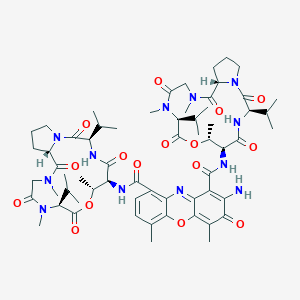
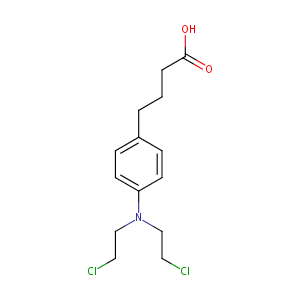
Dactinomycin Chlorambucil
Indication
Disease Entry Status REF
Adenocarcinoma Investigative [1]
Component Drugs Dactinomycin   DM2YGNW Chlorambucil   DMRKE63
Small molecular drug Small molecular drug
2D MOL 2D MOL
3D MOL is unavailable 3D MOL
High-throughput Screening Result Testing Cell Line: OVCAR3
Zero Interaction Potency (ZIP) Score: 2.63
Bliss Independence Score: 5
Loewe Additivity Score: 0.89
LHighest Single Agent (HSA) Score: 5.08

Molecular Interaction Atlas of This Drug Combination

Molecular Interaction Atlas (MIA)
Indication(s) of Dactinomycin
Disease Entry ICD 11 Status REF
Adult kidney Wilms tumor N.A. Approved [2]
Advanced cancer 2A00-2F9Z Approved [2]
Beckwith-Wiedemann syndrome N.A. Approved [2]
Childhood kidney Wilms tumor N.A. Approved [2]
Gestational trophoblastic neoplasia 2F33-2F76 Approved [2]
Hamartoma N.A. Approved [2]
Solid tumour/cancer 2A00-2F9Z Approved [3]
Wilms tumor N.A. Approved [2]
Dactinomycin Interacts with 1 DTT Molecule(s)
DTT Name DTT ID UniProt ID Mode of Action REF
Human Deoxyribonucleic acid (hDNA) TTUTN1I NOUNIPROTAC Breaker [9]
------------------------------------------------------------------------------------
Dactinomycin Interacts with 3 DTP Molecule(s)
DTP Name DTP ID UniProt ID Mode of Action REF
Multidrug resistance-associated protein 1 (ABCC1) DTSYQGK MRP1_HUMAN Substrate [10]
P-glycoprotein 1 (ABCB1) DTUGYRD MDR1_HUMAN Substrate [11]
Breast cancer resistance protein (ABCG2) DTI7UX6 ABCG2_HUMAN Substrate [12]
------------------------------------------------------------------------------------
Dactinomycin Interacts with 58 DOT Molecule(s)
DOT Name DOT ID UniProt ID Mode of Action REF
ATP-dependent translocase ABCB1 (ABCB1) OTEJROBO MDR1_HUMAN Decreases Response To Substance [13]
Dihydropyrimidinase-related protein 4 (DPYSL4) OT3SBS2S DPYL4_HUMAN Increases Expression [6]
Integral membrane protein GPR137B (GPR137B) OT1CINQQ G137B_HUMAN Increases Expression [6]
Integrin alpha-IIb (ITGA2B) OT4Y17PY ITA2B_HUMAN Increases Expression [6]
Ras-related protein R-Ras (RRAS) OTBBF28C RRAS_HUMAN Increases Expression [6]
Growth arrest and DNA damage-inducible protein GADD45 alpha (GADD45A) OTDRV63V GA45A_HUMAN Increases Expression [6]
Stomatin (STOM) OTC8R6EH STOM_HUMAN Increases Expression [6]
Cellular retinoic acid-binding protein 2 (CRABP2) OTY01V9G RABP2_HUMAN Increases Expression [6]
Tyrosine-protein kinase receptor UFO (AXL) OTKA2SUX UFO_HUMAN Increases Expression [6]
14-3-3 protein sigma (SFN) OTLJCZ1U 1433S_HUMAN Increases Expression [6]
Tumor necrosis factor ligand superfamily member 9 (TNFSF9) OTV9L89D TNFL9_HUMAN Increases Expression [6]
Galectin-7 (LGALS7) OTMSVI7R LEG7_HUMAN Increases Expression [6]
Large ribosomal subunit protein eL34 (RPL34) OT0U9VMQ RL34_HUMAN Increases Expression [6]
Rho GDP-dissociation inhibitor 2 (ARHGDIB) OT9PD6CS GDIR2_HUMAN Increases Expression [6]
Epithelial membrane protein 1 (EMP1) OTSZHUHQ EMP1_HUMAN Increases Expression [6]
Epithelial membrane protein 3 (EMP3) OTODMJ1D EMP3_HUMAN Increases Expression [6]
Protein ripply3 (RIPPLY3) OT1HK35I DSCR6_HUMAN Increases Expression [6]
Endonuclease III-like protein 1 (NTHL1) OTPQXPT1 NTH_HUMAN Decreases Expression [6]
Kinesin-like protein KIF1A (KIF1A) OT3JVEGV KIF1A_HUMAN Increases Expression [6]
Protein AF1q (MLLT11) OTG5RVHC AF1Q_HUMAN Increases Expression [6]
Laminin subunit gamma-2 (LAMC2) OTJMTM72 LAMC2_HUMAN Increases Expression [6]
Filamin-C (FLNC) OT3F8J6Y FLNC_HUMAN Increases Expression [6]
Immediate early response gene 5 protein (IER5) OTJPTXMD IER5_HUMAN Increases Expression [6]
Keratin, type II cytoskeletal 80 (KRT80) OTAU54U3 K2C80_HUMAN Increases Expression [6]
All-trans-retinol 13,14-reductase (RETSAT) OTC3AOPX RETST_HUMAN Increases Expression [6]
Interleukin-27 receptor subunit alpha (IL27RA) OTSQBAKI I27RA_HUMAN Increases Expression [6]
Neuropilin and tolloid-like protein 2 (NETO2) OT0YAMC0 NETO2_HUMAN Increases Expression [6]
Mitochondria-eating protein (SPATA18) OTOEHTHU MIEAP_HUMAN Increases Expression [6]
Phospholipase ABHD3 (ABHD3) OTH8P977 ABHD3_HUMAN Increases Expression [6]
Homer protein homolog 3 (HOMER3) OTQ6D9X1 HOME3_HUMAN Increases Expression [6]
BSD domain-containing protein 1 (BSDC1) OT853CP9 BSDC1_HUMAN Increases Expression [6]
Stathmin-3 (STMN3) OT20F289 STMN3_HUMAN Increases Expression [6]
Endothelial protein C receptor (PROCR) OTRHED17 EPCR_HUMAN Increases Expression [6]
Fatty acid desaturase 3 (FADS3) OT9RVXGE FADS3_HUMAN Increases Expression [6]
Protein O-mannosyl-transferase 1 (POMT1) OTGQSHL5 POMT1_HUMAN Increases Expression [6]
Tumor protein p53-inducible protein 11 (TP53I11) OTFPDYZU P5I11_HUMAN Decreases Expression [14]
Tumor necrosis factor receptor superfamily member 10B (TNFRSF10B) OTA1CPBV TR10B_HUMAN Decreases Expression [15]
CASP8 and FADD-like apoptosis regulator (CFLAR) OTX14BAS CFLAR_HUMAN Decreases Expression [16]
Mitogen-activated protein kinase kinase kinase 7 (MAP3K7) OTUXEASC M3K7_HUMAN Decreases Expression [17]
Myc proto-oncogene protein (MYC) OTPV5LUK MYC_HUMAN Decreases Expression [17]
Collagen alpha-1(I) chain (COL1A1) OTI31178 CO1A1_HUMAN Decreases Expression [18]
Proto-oncogene tyrosine-protein kinase ROS (ROS1) OTDSKUGE ROS1_HUMAN Increases Expression [17]
Interleukin-8 (CXCL8) OTS7T5VH IL8_HUMAN Increases Expression [19]
Histone H2AX (H2AX) OT18UX57 H2AX_HUMAN Increases Expression [20]
Nuclear factor NF-kappa-B p105 subunit (NFKB1) OTNRRD8I NFKB1_HUMAN Decreases Expression [17]
Lamin-B1 (LMNB1) OT100T3P LMNB1_HUMAN Decreases Expression [17]
rRNA 2'-O-methyltransferase fibrillarin (FBL) OTRODIE5 FBRL_HUMAN Affects Localization [21]
DNA-directed RNA polymerase II subunit RPB1 (POLR2A) OTHJQ1DZ RPB1_HUMAN Decreases Phosphorylation [22]
Cyclin-dependent kinase inhibitor 1 (CDKN1A) OTQWHCZE CDN1A_HUMAN Decreases Expression [23]
Dual specificity mitogen-activated protein kinase kinase 4 (MAP2K4) OTZPZX11 MP2K4_HUMAN Decreases Expression [17]
Bcl-2-like protein 1 (BCL2L1) OTRC5K9O B2CL1_HUMAN Decreases Expression [24]
Son of sevenless homolog 1 (SOS1) OTTCWXC3 SOS1_HUMAN Decreases Expression [17]
FAS-associated death domain protein (FADD) OTV7GFHH FADD_HUMAN Decreases Expression [17]
Growth arrest-specific protein 6 (GAS6) OTPOPUUE GAS6_HUMAN Increases Degradation [25]
Bcl-2-binding component 3, isoforms 3/4 (BBC3) OTUAXDAY BBC3B_HUMAN Increases Expression [26]
Transcription factor SOX-17 (SOX17) OT9H4WWE SOX17_HUMAN Decreases Localization [27]
Hyaluronidase-1 (HYAL1) OT2SJN0X HYAL1_HUMAN Increases ADR [28]
Complement component 1 Q subcomponent-binding protein, mitochondrial (C1QBP) OTPYQX3K C1QBP_HUMAN Decreases Response To Substance [29]
------------------------------------------------------------------------------------
⏷ Show the Full List of 58 DOT(s)
Indication(s) of Chlorambucil
Disease Entry ICD 11 Status REF
Chronic lymphocytic leukaemia 2A82.0 Approved [4]
Small lymphocytic lymphoma 2A82.0 Approved [5]
Classic Hodgkin lymphoma N.A. Investigative [5]
Follicular lymphoma 2A80 Investigative [5]
Chlorambucil Interacts with 1 DTT Molecule(s)
DTT Name DTT ID UniProt ID Mode of Action REF
DNA replication (DNA repli) TTABD5E NOUNIPROTAC Intercalator [30]
------------------------------------------------------------------------------------
Chlorambucil Interacts with 2 DTP Molecule(s)
DTP Name DTP ID UniProt ID Mode of Action REF
P-glycoprotein 1 (ABCB1) DTUGYRD MDR1_HUMAN Substrate [31]
Organic anion transporting polypeptide 1A2 (SLCO1A2) DTE2B1D SO1A2_HUMAN Substrate [32]
------------------------------------------------------------------------------------
Chlorambucil Interacts with 1 DME Molecule(s)
DME Name DME ID UniProt ID Mode of Action REF
Glutathione S-transferase pi (GSTP1) DEK6079 GSTP1_HUMAN Metabolism [33]
------------------------------------------------------------------------------------
Chlorambucil Interacts with 21 DOT Molecule(s)
DOT Name DOT ID UniProt ID Mode of Action REF
ATP-dependent translocase ABCB1 (ABCB1) OTEJROBO MDR1_HUMAN Increases Expression [34]
Aldo-keto reductase family 1 member B10 (AKR1B10) OTOA4HTH AK1BA_HUMAN Decreases Expression [35]
Aldo-keto reductase family 1 member C2 (AKR1C2) OTQ2XMO3 AK1C2_HUMAN Decreases Expression [35]
Bcl-2-interacting killer (BIK) OTTH1T3D BIK_HUMAN Increases Expression [35]
F-box only protein 30 (FBXO30) OTD1P6LA FBX30_HUMAN Decreases Expression [35]
Histone chaperone ASF1A (ASF1A) OT4S44GP ASF1A_HUMAN Decreases Expression [35]
Tumor necrosis factor receptor superfamily member 10A (TNFRSF10A) OTBPCU2O TR10A_HUMAN Affects Expression [36]
Tumor necrosis factor receptor superfamily member 10B (TNFRSF10B) OTA1CPBV TR10B_HUMAN Increases Expression [37]
Baculoviral IAP repeat-containing protein 5 (BIRC5) OTILXZYL BIRC5_HUMAN Affects Expression [38]
Myc proto-oncogene protein (MYC) OTPV5LUK MYC_HUMAN Increases Expression [39]
Histone H2AX (H2AX) OT18UX57 H2AX_HUMAN Increases Phosphorylation [40]
HLA class II histocompatibility antigen, DP alpha 1 chain (HLA-DPA1) OT7OG7Y2 DPA1_HUMAN Affects Expression [41]
Tumor necrosis factor receptor superfamily member 6 (FAS) OTP9XG86 TNR6_HUMAN Increases Expression [42]
14-3-3 protein sigma (SFN) OTLJCZ1U 1433S_HUMAN Increases Expression [37]
Cyclin-dependent kinase inhibitor 1 (CDKN1A) OTQWHCZE CDN1A_HUMAN Increases Expression [43]
Histone H4 (H4C1) OTB71W46 H4_HUMAN Decreases Expression [40]
kinase isozyme 4, mitochondrial (PDK4) OTCMHMBZ PDK4_HUMAN Affects Expression [44]
Bcl-2-binding component 3, isoforms 3/4 (BBC3) OTUAXDAY BBC3B_HUMAN Increases Expression [38]
Fanconi anemia group G protein (FANCG) OT7MC8TZ FANCG_HUMAN Increases Response To Substance [45]
Baculoviral IAP repeat-containing protein 2 (BIRC2) OTFXFREP BIRC2_HUMAN Decreases Response To Substance [46]
Fanconi anemia group C protein (FANCC) OTTIDM3P FANCC_HUMAN Increases Response To Substance [45]
------------------------------------------------------------------------------------
⏷ Show the Full List of 21 DOT(s)

Test Results of This Drug Combination in Other Disease Systems

Indication DrugCom ID Cell Line Status REF
Adenocarcinoma DCSRGUS HT29 Investigative [1]
------------------------------------------------------------------------------------

References

1 CheMBL Affinity Phenotypic Cellular Interaction Assay ID: CHEMBL1125976
2 Dactinomycin FDA Label
3 FDA Approved Drug Products from FDA Official Website. 2009. Application Number: (NDA) 050682.
4 URL: http://www.guidetopharmacology.org Nucleic Acids Res. 2015 Oct 12. pii: gkv1037. The IUPHAR/BPS Guide to PHARMACOLOGY in 2016: towards curated quantitative interactions between 1300 protein targets and 6000 ligands. (Ligand id: 7143).
5 Chlorambucil FDA Label
6 Genomic profiling uncovers a molecular pattern for toxicological characterization of mutagens and promutagens in vitro. Toxicol Sci. 2011 Jul;122(1):185-97.
7 Synergy is achieved by complementation with Apo2L/TRAIL and actinomycin D in Apo2L/TRAIL-mediated apoptosis of prostate cancer cells: role of XIAP in resistance. Prostate. 2002 Dec 1;53(4):286-99. doi: 10.1002/pros.10155.
8 Endocrine disruptors fludioxonil and fenhexamid stimulate miR-21 expression in breast cancer cells. Toxicol Sci. 2013 Jan;131(1):71-83. doi: 10.1093/toxsci/kfs290. Epub 2012 Oct 10.
9 Structural studies of atom-specific anticancer drugs acting on DNA. Pharmacol Ther. 1999 Sep;83(3):181-215.
10 Expression of multidrug resistance-associated protein in NIH/3T3 cells confers multidrug resistance associated with increased drug efflux and altered intracellular drug distribution. Cancer Res. 1995 Nov 15;55(22):5342-7.
11 Potential role of drug transporters in the pathogenesis of medically intractable epilepsy. Epilepsia. 2005 Feb;46(2):224-35.
12 Breast cancer resistance protein (BCRP/ABCG2) induces cellular resistance to HIV-1 nucleoside reverse transcriptase inhibitors. Mol Pharmacol. 2003 Jan;63(1):65-72.
13 Establishment and characterization of new cellular lymphoma model expressing transgenic human MDR1. Leuk Res. 2005 Apr;29(4):407-14. doi: 10.1016/j.leukres.2004.09.001.
14 Possible roles of a tumor suppressor gene PIG11 in hepatocarcinogenesis and As2O3-induced apoptosis in liver cancer cells. J Gastroenterol. 2009;44(5):460-9. doi: 10.1007/s00535-009-0030-1. Epub 2009 Apr 1.
15 Death receptor regulation and celecoxib-induced apoptosis in human lung cancer cells. J Natl Cancer Inst. 2004 Dec 1;96(23):1769-80. doi: 10.1093/jnci/djh322.
16 Combination of tumor necrosis factor-related apoptosis-inducing ligand (TRAIL) and actinomycin D induces apoptosis even in TRAIL-resistant human pancreatic cancer cells. Clin Cancer Res. 2001 Feb;7(2):407-14.
17 Response rate of fibrosarcoma cells to cytotoxic drugs on the expression level correlates to the therapeutic response rate of fibrosarcomas and is mediated by regulation of apoptotic pathways. BMC Cancer. 2005 Jul 7;5:74. doi: 10.1186/1471-2407-5-74.
18 The effects of particulate wear debris, cytokines, and growth factors on the functions of MG-63 osteoblasts. J Bone Joint Surg Am. 2001 Feb;83(2):201-11. doi: 10.2106/00004623-200102000-00007.
19 Profiling the immunotoxicity of chemicals based on in vitro evaluation by a combination of the Multi-ImmunoTox assay and the IL-8 Luc assay. Arch Toxicol. 2018 Jun;92(6):2043-2054. doi: 10.1007/s00204-018-2199-7. Epub 2018 Mar 29.
20 Actinomycin D inhibits the expression of the cystine/glutamate transporter xCT via attenuation of CD133 synthesis in CD133(+) HCC. Chem Biol Interact. 2019 Aug 25;309:108713. doi: 10.1016/j.cbi.2019.06.026. Epub 2019 Jun 19.
21 Specific inhibition of rRNA transcription and dynamic relocation of fibrillarin induced by mercury. Exp Cell Res. 2000 Aug 25;259(1):225-38. doi: 10.1006/excr.2000.4923.
22 Phosphorylation of the RNA polymerase II largest subunit during heat shock and inhibition of transcription in HeLa cells. J Cell Physiol. 1994 Mar;158(3):417-26. doi: 10.1002/jcp.1041580305.
23 Selective and nonselective toxicity of TRAIL/Apo2L combined with chemotherapy in human bone tumour cells vs. normal human cells. Int J Cancer. 2003 Dec 20;107(6):929-40. doi: 10.1002/ijc.11503.
24 Mechanisms of thymidine kinase/ganciclovir and cytosine deaminase/ 5-fluorocytosine suicide gene therapy-induced cell death in glioma cells. Oncogene. 2005 Feb 10;24(7):1231-43. doi: 10.1038/sj.onc.1208290.
25 Androgen receptor-dependent transactivation of growth arrest-specific gene 6 mediates inhibitory effects of testosterone on vascular calcification. J Biol Chem. 2010 Mar 5;285(10):7537-44. doi: 10.1074/jbc.M109.055087. Epub 2010 Jan 4.
26 Actinomycin D upregulates proapoptotic protein Puma and downregulates Bcl-2 mRNA in normal peripheral blood lymphocytes. Anticancer Drugs. 2007 Aug;18(7):763-72. doi: 10.1097/CAD.0b013e3280adc905.
27 A high-throughput screen for teratogens using human pluripotent stem cells. Toxicol Sci. 2014 Jan;137(1):76-90. doi: 10.1093/toxsci/kft239. Epub 2013 Oct 23.
28 ADReCS-Target: target profiles for aiding drug safety research and application. Nucleic Acids Res. 2018 Jan 4;46(D1):D911-D917. doi: 10.1093/nar/gkx899.
29 [Expression of C1QBP gene and its correlation with drug resistance in human resistance choriocarcinoma cell line]. Zhonghua Fu Chan Ke Za Zhi. 2014 Aug;49(8):616-20.
30 Roles of DNA repair and reductase activity in the cytotoxicity of the hypoxia-activated dinitrobenzamide mustard PR-104A. Mol Cancer Ther. 2009 Jun;8(6):1714-23.
31 Mammalian drug efflux transporters of the ATP binding cassette (ABC) family in multidrug resistance: A review of the past decade. Cancer Lett. 2016 Jan 1;370(1):153-64.
32 Transporters and renal drug elimination. Annu Rev Pharmacol Toxicol. 2004;44:137-66.
33 The anti-cancer drug chlorambucil as a substrate for the human polymorphic enzyme glutathione transferase P1-1: kinetic properties and crystallographic characterisation of allelic variants. J Mol Biol. 2008 Jun 27;380(1):131-44.
34 Enhanced in vitro invasiveness and drug resistance with altered gene expression patterns in a human lung carcinoma cell line after pulse selection with anticancer drugs. Int J Cancer. 2004 Sep 10;111(4):484-93. doi: 10.1002/ijc.20230.
35 Oxidative stress mechanisms do not discriminate between genotoxic and nongenotoxic liver carcinogens. Chem Res Toxicol. 2015 Aug 17;28(8):1636-46.
36 Role of the TRAIL/APO2-L death receptors in chlorambucil- and fludarabine-induced apoptosis in chronic lymphocytic leukemia. Oncogene. 2003 Nov 13;22(51):8356-69. doi: 10.1038/sj.onc.1207004.
37 Differential effects of chemotherapeutic drugs versus the MDM-2 antagonist nutlin-3 on cell cycle progression and induction of apoptosis in SKW6.4 lymphoblastoid B-cells. J Cell Biochem. 2008 May 15;104(2):595-605. doi: 10.1002/jcb.21649.
38 Differential gene expression induction by TRAIL in B chronic lymphocytic leukemia (B-CLL) cells showing high versus low levels of Zap-70. J Cell Physiol. 2007 Oct;213(1):229-36. doi: 10.1002/jcp.21116.
39 Theophylline synergizes with chlorambucil in inducing apoptosis of B-chronic lymphocytic leukemia cells. Blood. 1996 Sep 15;88(6):2172-82.
40 A two-hit mechanism for pre-mitotic arrest of cancer cell proliferation by a polyamide-alkylator conjugate. Cell Cycle. 2006 Jul;5(14):1537-48. doi: 10.4161/cc.5.14.2913. Epub 2006 Jul 17.
41 Systems pharmacological analysis of drugs inducing stevens-johnson syndrome and toxic epidermal necrolysis. Chem Res Toxicol. 2015 May 18;28(5):927-34. doi: 10.1021/tx5005248. Epub 2015 Apr 3.
42 Caspase 8 activation independent of Fas (CD95/APO-1) signaling may mediate killing of B-chronic lymphocytic leukemia cells by cytotoxic drugs or gamma radiation. Blood. 2001 Nov 1;98(9):2800-7. doi: 10.1182/blood.v98.9.2800.
43 Disruption of gene expression and induction of apoptosis in prostate cancer cells by a DNA-damaging agent tethered to an androgen receptor ligand. Chem Biol. 2005 Jul;12(7):779-87. doi: 10.1016/j.chembiol.2005.05.009.
44 The MT1G Gene in LUHMES Neurons Is a Sensitive Biomarker of Neurotoxicity. Neurotox Res. 2020 Dec;38(4):967-978. doi: 10.1007/s12640-020-00272-3. Epub 2020 Sep 1.
45 In vivo therapeutic responses contingent on Fanconi anemia/BRCA2 status of the tumor. Clin Cancer Res. 2005 Oct 15;11(20):7508-15. doi: 10.1158/1078-0432.CCR-05-1048.
46 Expression and prognostic significance of IAP-family genes in human cancers and myeloid leukemias. Clin Cancer Res. 2000 May;6(5):1796-803.