General Information of Drug Combination (ID: DC48P9H)

Drug Combination Name
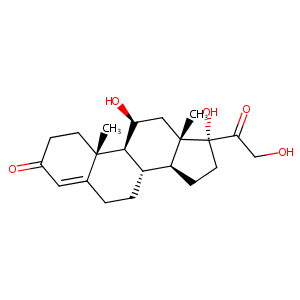
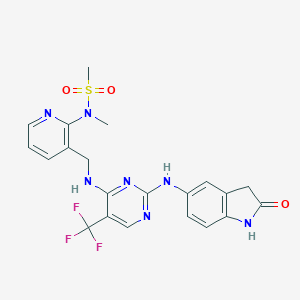
Hydrocortisone PF-562271
Indication
Disease Entry Status REF
Diffuse large B cell lymphoma Investigative [1]
Component Drugs Hydrocortisone   DMGEMB7 PF-562271   DMSLE03
Small molecular drug Small molecular drug
2D MOL 2D MOL
3D MOL 3D MOL
High-throughput Screening Result Testing Cell Line: TMD8
Zero Interaction Potency (ZIP) Score: 17
Bliss Independence Score: 21.55
Loewe Additivity Score: 4.33
LHighest Single Agent (HSA) Score: 9.88

Molecular Interaction Atlas of This Drug Combination

Molecular Interaction Atlas (MIA)
Indication(s) of Hydrocortisone
Disease Entry ICD 11 Status REF
Acne vulgaris ED80 Approved [2]
Acute adrenal insufficiency N.A. Approved [2]
Addison disease 5A74.0 Approved [2]
Allergic rhinitis CA08.0 Approved [2]
Angioedema 4A00.15 Approved [2]
Aspiration pneumonitis N.A. Approved [2]
Autoimmune haemolytic anaemia 3A20 Approved [2]
Blepharoconjunctivitis N.A. Approved [2]
Bursitis N.A. Approved [2]
Cerebral edema 8D60.1 Approved [2]
Corneal abrasion NA06.4 Approved [2]
Corneal ulcer 9A76 Approved [2]
Crohn disease DD70 Approved [2]
Dermatitis herpetiformis EB44 Approved [2]
Diamond-Blackfan anemia N.A. Approved [2]
Disorder of orbital region N.A. Approved [2]
Erythema multiforme N.A. Approved [2]
Exanthem N.A. Approved [2]
Gingival disorder N.A. Approved [2]
Granuloma annulare N.A. Approved [2]
Inflammation 1A00-CA43.1 Approved [3]
Inflammatory bowel disease DD72 Approved [2]
Keratitis N.A. Approved [2]
Malignant otitis externa caused by Pseudomonas aeruginosa N.A. Approved [2]
Multiple sclerosis 8A40 Approved [2]
Mycosis fungoides 2B01 Approved [2]
Primary cutaneous T-cell lymphoma N.A. Approved [2]
Proctitis DB33.Z Approved [2]
Psoriasis EA90 Approved [2]
Psoriatic arthritis FA21 Approved [2]
Rheumatic heart disease N.A. Approved [2]
Rosacea ED90.0 Approved [2]
Sarcoidosis 4B20.5 Approved [2]
Serum sickness N.A. Approved [2]
Severe asthma CA23 Approved [2]
Systemic lupus erythematosus 4A40.0 Approved [2]
Tinea corporis 1F28.Y Approved [2]
Tinea cruris 1F28.3 Approved [2]
Ulcerative colitis DD71 Approved [2]
Viral pneumonia N.A. Approved [2]
Coronavirus Disease 2019 (COVID-19) 1D6Y Phase 3 [4]
Congenital adrenal hyperplasia 5A71.01 Phase 2 [5]
Acquired thrombocytopenia N.A. Investigative [2]
Asthma CA23 Investigative [2]
Beta-thalassemia major N.A. Investigative [2]
Classic Hodgkin lymphoma N.A. Investigative [2]
Iridocyclitis N.A. Investigative [2]
Phobic disorder N.A. Investigative [2]
Rheumatoid arthritis FA20 Investigative [2]
Synovitis N.A. Investigative [2]
Tinea pedis 1F28.2 Investigative [2]
Trichinellosis N.A. Investigative [2]
Uveitis 9A96.Z Investigative [2]
Hydrocortisone Interacts with 1 DTT Molecule(s)
DTT Name DTT ID UniProt ID Mode of Action REF
Glucocorticoid receptor (NR3C1) TTYRL6O GCR_HUMAN Modulator [10]
------------------------------------------------------------------------------------
Hydrocortisone Interacts with 1 DTP Molecule(s)
DTP Name DTP ID UniProt ID Mode of Action REF
P-glycoprotein 1 (ABCB1) DTUGYRD MDR1_HUMAN Substrate [11]
------------------------------------------------------------------------------------
Hydrocortisone Interacts with 5 DME Molecule(s)
DME Name DME ID UniProt ID Mode of Action REF
Cytochrome P450 3A4 (CYP3A4) DE4LYSA CP3A4_HUMAN Metabolism [12]
Cytochrome P450 3A5 (CYP3A5) DEIBDNY CP3A5_HUMAN Metabolism [13]
Cytochrome P450 3A7 (CYP3A7) DERD86B CP3A7_HUMAN Metabolism [14]
Steroid 11-beta-hydroxylase (CYP11B1) DEPE0RD C11B1_HUMAN Metabolism [15]
Aldosterone synthase (CYP11B2) DE6TYUK C11B2_HUMAN Metabolism [15]
------------------------------------------------------------------------------------
Hydrocortisone Interacts with 58 DOT Molecule(s)
DOT Name DOT ID UniProt ID Mode of Action REF
ATP-dependent translocase ABCB1 (ABCB1) OTEJROBO MDR1_HUMAN Increases Secretion [16]
Interleukin-8 (CXCL8) OTS7T5VH IL8_HUMAN Decreases Secretion [17]
GDH/6PGL endoplasmic bifunctional protein (H6PD) OTO7TNDD G6PE_HUMAN Increases Expression [18]
Disintegrin and metalloproteinase domain-containing protein 12 (ADAM12) OTZKOTDB ADA12_HUMAN Decreases Expression [19]
Mitogen-activated protein kinase kinase kinase 7 (MAP3K7) OTUXEASC M3K7_HUMAN Decreases Expression [19]
Integrin alpha-10 (ITGA10) OTM0V5AO ITA10_HUMAN Increases Expression [19]
Insulin-like growth factor-binding protein 5 (IGFBP5) OTRE5V0C IBP5_HUMAN Decreases Expression [19]
Adhesion G protein-coupled receptor E5 (ADGRE5) OTTSB84Q AGRE5_HUMAN Decreases Expression [19]
Metallothionein-1X (MT1X) OT9AKFVS MT1X_HUMAN Increases Expression [19]
Collagen alpha-1(VII) chain (COL7A1) OT3MIRZJ CO7A1_HUMAN Decreases Expression [19]
Peptidyl-prolyl cis-trans isomerase FKBP5 (FKBP5) OT404F9K FKBP5_HUMAN Increases Expression [19]
Nuclear receptor subfamily 6 group A member 1 (NR6A1) OTFZOOQ9 NR6A1_HUMAN Decreases Expression [19]
Protein prune homolog 2 (PRUNE2) OTGW2974 PRUN2_HUMAN Decreases Expression [19]
Adhesion G-protein coupled receptor G1 (ADGRG1) OTQBB8NT AGRG1_HUMAN Decreases Expression [19]
3 beta-hydroxysteroid dehydrogenase/Delta 5-->4-isomerase type 1 (HSD3B1) OTNAZVKB 3BHS1_HUMAN Affects Binding [20]
Steroidogenic acute regulatory protein, mitochondrial (STAR) OTFEZ5AI STAR_HUMAN Decreases Expression [21]
CCAAT/enhancer-binding protein alpha (CEBPA) OTOM9OE4 CEBPA_HUMAN Increases Expression [21]
Basic helix-loop-helix ARNT-like protein 1 (BMAL1) OTMI12L2 BMAL1_HUMAN Decreases Expression [9]
Dihydroxyacetone phosphate acyltransferase (GNPAT) OTF6LWPO GNPAT_HUMAN Increases Expression [7]
ATP-binding cassette sub-family C member 3 (ABCC3) OTC3IJV4 MRP3_HUMAN Increases Expression [22]
Period circadian protein homolog 1 (PER1) OTVQF3WX PER1_HUMAN Increases Expression [9]
Trehalase (TREH) OTJE0NOY TREA_HUMAN Decreases Activity [23]
Renin (REN) OT52GZR2 RENI_HUMAN Decreases Expression [24]
Antithrombin-III (SERPINC1) OTDFATG0 ANT3_HUMAN Increases Expression [25]
Natriuretic peptides A (NPPA) OTMQNTNX ANF_HUMAN Increases Expression [26]
Pro-neuropeptide Y (NPY) OT4ICV3P NPY_HUMAN Affects Expression [27]
Annexin A1 (ANXA1) OT5OFDJC ANXA1_HUMAN Increases Expression [7]
Kallikrein-1 (KLK1) OTFGP3UR KLK1_HUMAN Increases Export [26]
Involucrin (IVL) OT4VPNGY INVO_HUMAN Decreases Expression [28]
Pulmonary surfactant-associated protein B (SFTPB) OTOHS07E PSPB_HUMAN Increases Expression [29]
C-C motif chemokine 3 (CCL3) OTW2H3ND CCL3_HUMAN Increases Expression [30]
Pulmonary surfactant-associated protein C (SFTPC) OTIZJD09 PSPC_HUMAN Increases Expression [29]
C-C motif chemokine 4 (CCL4) OT6B8P25 CCL4_HUMAN Increases Expression [30]
C-C motif chemokine 2 (CCL2) OTAD2HEL CCL2_HUMAN Decreases Expression [30]
Filaggrin (FLG) OTE9QDV6 FILA_HUMAN Decreases Expression [28]
Loricrin (LORICRIN) OTFRPVEO LORI_HUMAN Decreases Expression [28]
Cadherin-5 (CDH5) OTVX0E1Q CADH5_HUMAN Increases Localization [7]
T-lymphocyte activation antigen CD80 (CD80) OTJBLUQE CD80_HUMAN Decreases Expression [31]
Catenin beta-1 (CTNNB1) OTZ932A3 CTNB1_HUMAN Increases Localization [7]
Amiloride-sensitive sodium channel subunit alpha (SCNN1A) OTE2KVZV SCNNA_HUMAN Increases Expression [32]
Carnitine O-palmitoyltransferase 1, liver isoform (CPT1A) OTI862QH CPT1A_HUMAN Decreases Expression [33]
Amiloride-sensitive sodium channel subunit beta (SCNN1B) OT61QQTL SCNNB_HUMAN Increases Expression [32]
Amiloride-sensitive sodium channel subunit gamma (SCNN1G) OTSJYQVQ SCNNG_HUMAN Increases Expression [32]
Ras-related protein Rap-1A (RAP1A) OT5RH6TI RAP1A_HUMAN Increases Expression [7]
Tight junction protein ZO-1 (TJP1) OTBDCUPK ZO1_HUMAN Increases Localization [7]
Acetyl-CoA carboxylase 1 (ACACA) OT5CQPZY ACACA_HUMAN Increases Expression [33]
Splicing factor 1 (SF1) OTLEDM2S SF01_HUMAN Decreases Expression [34]
Cryptochrome-1 (CRY1) OTTGAJT0 CRY1_HUMAN Increases Expression [9]
Atypical chemokine receptor 1 (ACKR1) OT9M11LX ACKR1_HUMAN Increases Expression [7]
Occludin (OCLN) OTSUTVWL OCLN_HUMAN Increases Expression [7]
Patatin-like phospholipase domain-containing protein 2 (PNPLA2) OTR3ERMR PLPL2_HUMAN Decreases Expression [33]
TSC22 domain family protein 3 (TSC22D3) OT03UM03 T22D3_HUMAN Increases Expression [7]
Oxytocin-neurophysin 1 (OXT) OT48M72Z NEU1_HUMAN Affects Abundance [35]
Aldo-keto reductase family 1 member D1 (AKR1D1) OTBDJ6RL AK1D1_HUMAN Increases Reduction [36]
Histone-binding protein RBBP7 (RBBP7) OTLB56HX RBBP7_HUMAN Affects Response To Substance [37]
Glycodelin (PAEP) OTQA0NV4 PAEP_HUMAN Increases Metabolism [38]
Pro-opiomelanocortin (POMC) OTV41F7T COLI_HUMAN Increases Abundance [39]
T-box transcription factor TBX19 (TBX19) OTXEMR2U TBX19_HUMAN Decreases Abundance [40]
------------------------------------------------------------------------------------
⏷ Show the Full List of 58 DOT(s)
Indication(s) of PF-562271
Disease Entry ICD 11 Status REF
Solid tumour/cancer 2A00-2F9Z Phase 1 [6]
PF-562271 Interacts with 1 DTT Molecule(s)
DTT Name DTT ID UniProt ID Mode of Action REF
Focal adhesion kinase 1 (FAK) TTON5IT FAK1_HUMAN Inhibitor [41]
------------------------------------------------------------------------------------

References

1 CheMBL Affinity Phenotypic Cellular Interaction Assay ID: CHEMBL1125966
2 Hydrocortisone FDA Label
3 URL: http://www.guidetopharmacology.org Nucleic Acids Res. 2015 Oct 12. pii: gkv1037. The IUPHAR/BPS Guide to PHARMACOLOGY in 2016: towards curated quantitative interactions between 1300 protein targets and 6000 ligands. (Ligand id: 2868).
4 Hydrocortisone for COVID-19 and Severe Hypoxia (COVID STEROID)
5 Clinical pipeline report, company report or official report of the Pharmaceutical Research and Manufacturers of America (PhRMA)
6 ClinicalTrials.gov (NCT00666926) Study Of PF-00562271, Including Patients With Pancreatic, Head And Neck, Prostatic Neoplasms. U.S. National Institutes of Health.
7 Hydrocortisone enhances the barrier properties of HBMEC/ci, a brain microvascular endothelial cell line, through mesenchymal-to-endothelial transition-like effects. Fluids Barriers CNS. 2015 Mar 5;12:7. doi: 10.1186/s12987-015-0003-0. eCollection 2015.
8 Effect of cortisol on cell proliferation and the expression of lipoprotein lipase and vascular endothelial growth factor in a human osteosarcoma cell line. Cancer Chemother Pharmacol. 2008 Mar;61(3):471-9. doi: 10.1007/s00280-007-0492-x. Epub 2007 Jun 5.
9 Peripheral CLOCK regulates target-tissue glucocorticoid receptor transcriptional activity in a circadian fashion in man. PLoS One. 2011;6(9):e25612. doi: 10.1371/journal.pone.0025612. Epub 2011 Sep 28.
10 Drugs@FDA. U.S. Food and Drug Administration. U.S. Department of Health & Human Services.
11 Oral and inhaled corticosteroids: differences in P-glycoprotein (ABCB1) mediated efflux. Toxicol Appl Pharmacol. 2012 May 1;260(3):294-302.
12 Regulation of the CYP3A4 gene by hydrocortisone and xenobiotics: role of the glucocorticoid and pregnane X receptors. Drug Metab Dispos. 2000 May;28(5):493-6.
13 CYP3A5 genotype is associated with elevated blood pressure. Pharmacogenet Genomics. 2005 Oct;15(10):737-41.
14 Steroid hydroxylation by human fetal CYP3A7 and human NADPH-cytochrome P450 reductase coexpressed in insect cells using baculovirus. Res Commun Mol Pathol Pharmacol. 1998 Apr;100(1):15-28.
15 Studies on the origin of circulating 18-hydroxycortisol and 18-oxocortisol in normal human subjects. J Clin Endocrinol Metab. 2004 Sep;89(9):4628-33.
16 Oral and inhaled corticosteroids: differences in P-glycoprotein (ABCB1) mediated efflux. Toxicol Appl Pharmacol. 2012 May 1;260(3):294-302. doi: 10.1016/j.taap.2012.03.008. Epub 2012 Mar 23.
17 Monomeric and oligomeric flavanols maintain the endogenous glucocorticoid response in human macrophages in pro-oxidant conditions in vitro. Chem Biol Interact. 2018 Aug 1;291:237-244.
18 Testosterone stimulates adipose tissue 11beta-hydroxysteroid dehydrogenase type 1 expression in a depot-specific manner in children. J Clin Endocrinol Metab. 2010 Jul;95(7):3300-8.
19 Ultradian cortisol pulsatility encodes a distinct, biologically important signal. PLoS One. 2011 Jan 18;6(1):e15766.
20 Towards a systematic analysis of human short-chain dehydrogenases/reductases (SDR): Ligand identification and structure-activity relationships. Chem Biol Interact. 2015 Jun 5;234:114-25.
21 Glucocorticoid-activation system mediated glucocorticoid-insulin-like growth factor 1 (GC-IGF1) axis programming alteration of adrenal dysfunction induced by prenatal caffeine exposure. Toxicol Lett. 2019 Mar 1;302:7-17.
22 Differential regulation of the human MRP2 and MRP3 gene expression by glucocorticoids. J Steroid Biochem Mol Biol. 2005 Aug;96(3-4):229-34. doi: 10.1016/j.jsbmb.2005.03.004.
23 Effect of hydrocortisone on the maturation of human foetal kidney explants in serum-free organ culture. Biochem Cell Biol. 1989 Feb-Mar;67(2-3):121-7. doi: 10.1139/o89-019.
24 Acute effects of hydrocortisone on plasma nitrate/nitrite activity and forearm vasodilator responsiveness in normal human subjects. Clin Exp Pharmacol Physiol. 2005 Mar;32(3):162-6. doi: 10.1111/j.1440-1681.2005.04173.x.
25 Stress doses of hydrocortisone reduce severe systemic inflammatory response syndrome and improve early outcome in a risk group of patients after cardiac surgery. Crit Care Med. 2003 Apr;31(4):1068-74. doi: 10.1097/01.CCM.0000059646.89546.98.
26 Experimental studies on cortisol-induced hypertension in humans. J Hum Hypertens. 1995 Jun;9(6):395-9.
27 Neuropeptide Y in cortisol-induced hypertension in male volunteers. Clin Exp Pharmacol Physiol. 1994 May;21(5):435-8. doi: 10.1111/j.1440-1681.1994.tb02538.x.
28 Deducing signaling pathways from parallel actions of arsenite and antimonite in human epidermal keratinocytes. Sci Rep. 2020 Feb 19;10(1):2890. doi: 10.1038/s41598-020-59577-0.
29 Regulation of messenger RNAs for the hydrophobic surfactant proteins in human lung. J Clin Invest. 1989 Apr;83(4):1191-7. doi: 10.1172/JCI114000.
30 Cell-based and cytokine-directed chemical screen to identify potential anti-multiple myeloma agents. Leuk Res. 2010 Jul;34(7):917-24. doi: 10.1016/j.leukres.2009.12.002. Epub 2010 Feb 8.
31 Tacrolimus ointment causes inflammatory dendritic epidermal cell depletion but no Langerhans cell apoptosis in patients with atopic dermatitis. J Allergy Clin Immunol. 2004 Jul;114(1):137-43. doi: 10.1016/j.jaci.2004.03.021.
32 P2Y receptor regulation of sodium transport in human mammary epithelial cells. Am J Physiol Cell Physiol. 2007 Nov;293(5):C1472-80. doi: 10.1152/ajpcell.00068.2007. Epub 2007 Aug 22.
33 Prenatal caffeine exposure increases the susceptibility to non-alcoholic fatty liver disease in female offspring rats via activation of GR-C/EBP-SIRT1 pathway. Toxicology. 2019 Apr 1;417:23-34. doi: 10.1016/j.tox.2019.02.008. Epub 2019 Feb 15.
34 Intergenerational genetic programming mechanism and sex differences of the adrenal corticosterone synthesis dysfunction in offspring induced by prenatal ethanol exposure. Toxicol Lett. 2021 Oct 15;351:78-88. doi: 10.1016/j.toxlet.2021.08.007. Epub 2021 Aug 25.
35 Relation of oxytocin to psychological stress responses and hypothalamic-pituitary-adrenocortical axis activity in older women. Psychosom Med. 2006 Mar-Apr;68(2):238-45. doi: 10.1097/01.psy.0000203242.95990.74.
36 Human and murine steroid 5-reductases (AKR1D1 and AKR1D4): insights into the role of the catalytic glutamic acid. Chem Biol Interact. 2019 May 25;305:163-170. doi: 10.1016/j.cbi.2019.03.025. Epub 2019 Mar 28.
37 Overexpression of RbAp46 facilitates stress-induced apoptosis and suppresses tumorigenicity of neoplastigenic breast epithelial cells. Int J Cancer. 2003 Jul 20;105(6):762-8. doi: 10.1002/ijc.11148.
38 Stimulation of progesterone, estradiol and cortisol in trophoblast tumor bewo cells by glycodelin A N-glycans. Anticancer Res. 2007 Jul-Aug;27(4A):2101-8.
39 Melatonin exerts direct inhibitory actions on ACTH responses in the human adrenal gland. Horm Metab Res. 2011 May;43(5):337-42. doi: 10.1055/s-0031-1271693. Epub 2011 Feb 17.
40 Low estriol levels in the maternal triple-marker screen as a predictor of isolated adrenocorticotropic hormone deficiency caused by a new mutation in the TPIT gene. Pediatrics. 2006 Feb;117(2):e322-7. doi: 10.1542/peds.2005-1973. Epub 2006 Jan 3.
41 Inhibition of focal adhesion kinase by PF-562,271 inhibits the growth and metastasis of pancreatic cancer concomitant with altering the tumor microenvironment. Mol Cancer Ther. 2011 Nov;10(11):2135-45.