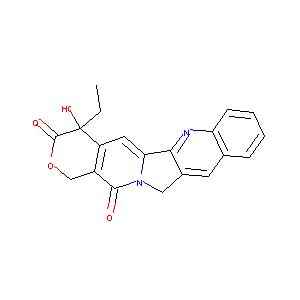
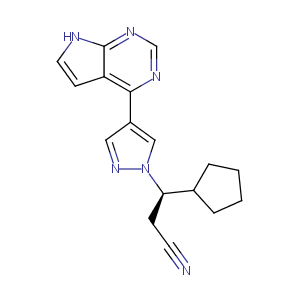
| DOT Name |
DOT ID |
UniProt ID |
Mode of Action |
REF |
|
Frataxin, mitochondrial (FXN)
|
OTE9U09A
|
FRDA_HUMAN
|
Increases Expression
|
[20] |
|
Serine/threonine-protein kinase Chk2 (CHEK2)
|
OT8ZPCNS
|
CHK2_HUMAN
|
Increases Expression
|
[14] |
|
ATP-dependent translocase ABCB1 (ABCB1)
|
OTEJROBO
|
MDR1_HUMAN
|
Decreases Expression
|
[21] |
|
Transcription factor SOX-12 (SOX12)
|
OT93P8C9
|
SOX12_HUMAN
|
Increases Methylation
|
[10] |
|
Superoxide dismutase , mitochondrial (SOD2)
|
OTIWXGZ9
|
SODM_HUMAN
|
Increases Expression
|
[10] |
|
Adenomatous polyposis coli protein (APC)
|
OTKV0TIK
|
APC_HUMAN
|
Increases Methylation
|
[10] |
|
Transcription factor SOX-11 (SOX11)
|
OT4LG7LA
|
SOX11_HUMAN
|
Increases Methylation
|
[10] |
|
Transcription factor SOX-3 (SOX3)
|
OT1CRCOB
|
SOX3_HUMAN
|
Increases Methylation
|
[10] |
|
Transcription factor SOX-8 (SOX8)
|
OTEJXYZM
|
SOX8_HUMAN
|
Increases Methylation
|
[10] |
|
Transcription factor SOX-4 (SOX4)
|
OTSS40SS
|
SOX4_HUMAN
|
Increases Methylation
|
[10] |
|
Centrosomal protein of 85 kDa-like (CEP85L)
|
OTSHJFOT
|
CE85L_HUMAN
|
Increases Methylation
|
[10] |
|
Centrosome-associated protein ALMS1 (ALMS1)
|
OTW66JKS
|
ALMS1_HUMAN
|
Decreases Methylation
|
[10] |
|
Solute carrier family 2, facilitated glucose transporter member 12 (SLC2A12)
|
OT0EDNV9
|
GTR12_HUMAN
|
Increases Methylation
|
[10] |
|
AMSH-like protease (STAMBPL1)
|
OTI4CYTF
|
STALP_HUMAN
|
Increases Methylation
|
[10] |
|
Frizzled-8 (FZD8)
|
OTZ9IRFL
|
FZD8_HUMAN
|
Decreases Methylation
|
[10] |
|
Transcription factor SOX-17 (SOX17)
|
OT9H4WWE
|
SOX17_HUMAN
|
Increases Methylation
|
[10] |
|
Frizzled-1 (FZD1)
|
OTZATHVS
|
FZD1_HUMAN
|
Decreases Methylation
|
[10] |
|
Arf-GAP with GTPase, ANK repeat and PH domain-containing protein 1 (AGAP1)
|
OTVX8835
|
AGAP1_HUMAN
|
Increases Methylation
|
[10] |
|
Transcription factor E2F8 (E2F8)
|
OTQKZGFP
|
E2F8_HUMAN
|
Increases Expression
|
[13] |
|
Transmembrane protein 250 (TMEM250)
|
OTLJ4G5G
|
TM250_HUMAN
|
Increases Expression
|
[13] |
|
Agrin (AGRN)
|
OTWJENAZ
|
AGRIN_HUMAN
|
Increases Expression
|
[22] |
|
Etoposide-induced protein 2.4 homolog (EI24)
|
OTD4NOYS
|
EI24_HUMAN
|
Increases Expression
|
[22] |
|
Tax1-binding protein 3 (TAX1BP3)
|
OTQ6IB4T
|
TX1B3_HUMAN
|
Increases Expression
|
[22] |
|
Baculoviral IAP repeat-containing protein 5 (BIRC5)
|
OTILXZYL
|
BIRC5_HUMAN
|
Decreases Expression
|
[23] |
|
SLIT-ROBO Rho GTPase-activating protein 3 (SRGAP3)
|
OT9ZS72C
|
SRGP3_HUMAN
|
Decreases Expression
|
[13] |
|
Histone-lysine N-methyltransferase SUV39H1 (SUV39H1)
|
OTDTF5BU
|
SUV91_HUMAN
|
Increases Expression
|
[13] |
|
Cytoplasmic protein NCK2 (NCK2)
|
OTUYPF55
|
NCK2_HUMAN
|
Decreases Expression
|
[22] |
|
Protein regulator of cytokinesis 1 (PRC1)
|
OTHD0XS0
|
PRC1_HUMAN
|
Decreases Expression
|
[22] |
|
A-kinase anchor protein 8 (AKAP8)
|
OTK3EQAI
|
AKAP8_HUMAN
|
Increases Expression
|
[13] |
|
Growth arrest and DNA damage-inducible protein GADD45 gamma (GADD45G)
|
OT8V1J4M
|
GA45G_HUMAN
|
Increases Expression
|
[11] |
|
Ubiquitin-like modifier-activating enzyme ATG7 (ATG7)
|
OTVT4YA1
|
ATG7_HUMAN
|
Increases Expression
|
[24] |
|
Myc proto-oncogene protein (MYC)
|
OTPV5LUK
|
MYC_HUMAN
|
Increases Expression
|
[24] |
|
Albumin (ALB)
|
OTVMM513
|
ALBU_HUMAN
|
Affects Binding
|
[25] |
|
Eukaryotic translation initiation factor 2 subunit 1 (EIF2S1)
|
OTM0GDTP
|
IF2A_HUMAN
|
Increases Phosphorylation
|
[24] |
|
Transcription factor Jun (JUN)
|
OTCYBO6X
|
JUN_HUMAN
|
Increases Expression
|
[26] |
|
Retinoblastoma-associated protein (RB1)
|
OTQJUJMZ
|
RB_HUMAN
|
Increases Phosphorylation
|
[26] |
|
DNA excision repair protein ERCC-1 (ERCC1)
|
OTNPYQHI
|
ERCC1_HUMAN
|
Decreases Expression
|
[11] |
|
Interleukin-6 receptor subunit alpha (IL6R)
|
OTCQL07Z
|
IL6RA_HUMAN
|
Decreases Expression
|
[12] |
|
Annexin A4 (ANXA4)
|
OTUCRYXL
|
ANXA4_HUMAN
|
Increases Expression
|
[22] |
|
Poly polymerase 1 (PARP1)
|
OT310QSG
|
PARP1_HUMAN
|
Increases Cleavage
|
[27] |
|
Interleukin-8 (CXCL8)
|
OTS7T5VH
|
IL8_HUMAN
|
Decreases Expression
|
[12] |
|
C-C motif chemokine 4 (CCL4)
|
OT6B8P25
|
CCL4_HUMAN
|
Decreases Expression
|
[12] |
|
C-C motif chemokine 2 (CCL2)
|
OTAD2HEL
|
CCL2_HUMAN
|
Decreases Expression
|
[12] |
|
C-C motif chemokine 5 (CCL5)
|
OTSCA5CK
|
CCL5_HUMAN
|
Decreases Expression
|
[12] |
|
Carcinoembryonic antigen-related cell adhesion molecule 1 (CEACAM1)
|
OTPWI88U
|
CEAM1_HUMAN
|
Increases Expression
|
[22] |
|
Histone H2AX (H2AX)
|
OT18UX57
|
H2AX_HUMAN
|
Increases Expression
|
[28] |
|
Methylated-DNA--protein-cysteine methyltransferase (MGMT)
|
OT40A9WH
|
MGMT_HUMAN
|
Decreases Expression
|
[29] |
|
Cyclic AMP-dependent transcription factor ATF-4 (ATF4)
|
OTRFV19J
|
ATF4_HUMAN
|
Increases Expression
|
[24] |
|
NADPH:adrenodoxin oxidoreductase, mitochondrial (FDXR)
|
OTPDCK1F
|
ADRO_HUMAN
|
Increases Expression
|
[22] |
|
Growth arrest and DNA damage-inducible protein GADD45 alpha (GADD45A)
|
OTDRV63V
|
GA45A_HUMAN
|
Decreases Expression
|
[11] |
|
Retinoblastoma-like protein 1 (RBL1)
|
OTDEBFYC
|
RBL1_HUMAN
|
Decreases Expression
|
[26] |
|
DNA damage-inducible transcript 3 protein (DDIT3)
|
OTI8YKKE
|
DDIT3_HUMAN
|
Decreases Expression
|
[30] |
|
Coilin (COIL)
|
OTP4I4DL
|
COIL_HUMAN
|
Increases Expression
|
[13] |
|
Cyclin-dependent kinase inhibitor 1 (CDKN1A)
|
OTQWHCZE
|
CDN1A_HUMAN
|
Increases Expression
|
[31] |
|
Tumor necrosis factor ligand superfamily member 9 (TNFSF9)
|
OTV9L89D
|
TNFL9_HUMAN
|
Increases Expression
|
[22] |
|
Mitogen-activated protein kinase 8 (MAPK8)
|
OTEREYS5
|
MK08_HUMAN
|
Increases Phosphorylation
|
[32] |
|
Mitogen-activated protein kinase 9 (MAPK9)
|
OTCEVJ9E
|
MK09_HUMAN
|
Increases Phosphorylation
|
[26] |
|
Dual specificity mitogen-activated protein kinase kinase 3 (MAP2K3)
|
OTI2OREX
|
MP2K3_HUMAN
|
Increases Expression
|
[22] |
|
Double-strand break repair protein MRE11 (MRE11)
|
OTGU8TZM
|
MRE11_HUMAN
|
Decreases Expression
|
[11] |
|
Cytochrome c (CYCS)
|
OTBFALJD
|
CYC_HUMAN
|
Affects Localization
|
[33] |
|
Transcription factor Sp3 (SP3)
|
OTYDQZ1T
|
SP3_HUMAN
|
Increases Activity
|
[34] |
|
CCAAT/enhancer-binding protein zeta (CEBPZ)
|
OT11BATG
|
CEBPZ_HUMAN
|
Decreases Expression
|
[22] |
|
Unconventional myosin-Ie (MYO1E)
|
OTM9YSIZ
|
MYO1E_HUMAN
|
Decreases Expression
|
[13] |
|
Vesicle transport protein SEC20 (BNIP1)
|
OT7USYCY
|
SEC20_HUMAN
|
Increases Expression
|
[13] |
|
Mitotic spindle assembly checkpoint protein MAD2A (MAD2L1)
|
OTXNGZCG
|
MD2L1_HUMAN
|
Increases Expression
|
[32] |
|
Serine-protein kinase ATM (ATM)
|
OTQVOHLT
|
ATM_HUMAN
|
Decreases Expression
|
[11] |
|
Cyclin-dependent kinase 5 activator 1 (CDK5R1)
|
OTJELWK0
|
CD5R1_HUMAN
|
Increases Expression
|
[13] |
|
Bcl-2 homologous antagonist/killer (BAK1)
|
OTDP6ILW
|
BAK_HUMAN
|
Decreases Expression
|
[30] |
|
Quinone oxidoreductase PIG3 (TP53I3)
|
OTSCM68G
|
QORX_HUMAN
|
Increases Expression
|
[22] |
|
EPM2A-interacting protein 1 (EPM2AIP1)
|
OT21ALNF
|
EPMIP_HUMAN
|
Increases Expression
|
[22] |
|
tRNA-uridine aminocarboxypropyltransferase 1 (DTWD1)
|
OT95QT6P
|
DTWD1_HUMAN
|
Increases Expression
|
[13] |
|
TBC1 domain family member 16 (TBC1D16)
|
OTPR3C6A
|
TBC16_HUMAN
|
Decreases Expression
|
[13] |
|
Protein Jumonji (JARID2)
|
OT14UM8H
|
JARD2_HUMAN
|
Decreases Expression
|
[13] |
|
DNA repair protein RAD50 (RAD50)
|
OTYMU9G1
|
RAD50_HUMAN
|
Decreases Expression
|
[11] |
|
Small glutamine-rich tetratricopeptide repeat-containing protein beta (SGTB)
|
OTYZL88Z
|
SGTB_HUMAN
|
Decreases Expression
|
[13] |
|
Mitogen-activated protein kinase kinase kinase 5 (MAP3K5)
|
OTQR6ENW
|
M3K5_HUMAN
|
Decreases Expression
|
[22] |
|
Tumor protein 63 (TP63)
|
OT0WOOKQ
|
P63_HUMAN
|
Decreases Expression
|
[35] |
|
Serine/threonine-protein kinase PLK3 (PLK3)
|
OT19CT2Z
|
PLK3_HUMAN
|
Increases Expression
|
[22] |
|
Sphingomyelin phosphodiesterase 3 (SMPD3)
|
OTHQBETH
|
NSMA2_HUMAN
|
Increases Expression
|
[36] |
|
PH and SEC7 domain-containing protein 3 (PSD3)
|
OTTN9B9O
|
PSD3_HUMAN
|
Decreases Expression
|
[13] |
|
Eukaryotic translation initiation factor 2-alpha kinase 3 (EIF2AK3)
|
OT0DZGY4
|
E2AK3_HUMAN
|
Increases Phosphorylation
|
[24] |
|
Kelch-like protein 42 (KLHL42)
|
OTK6WARI
|
KLH42_HUMAN
|
Increases Expression
|
[13] |
|
Calcium-binding protein 39 (CAB39)
|
OT2CL9ST
|
CAB39_HUMAN
|
Decreases Expression
|
[22] |
|
RWD domain-containing protein 3 (RWDD3)
|
OTE76DY5
|
RWDD3_HUMAN
|
Increases Expression
|
[13] |
|
Integrin-binding sialoprotein (IBSP)
|
OT29944Y
|
SIAL_HUMAN
|
Decreases Response To Substance
|
[14] |
|
E3 ubiquitin-protein ligase RNF31 (RNF31)
|
OT4BZONL
|
RNF31_HUMAN
|
Decreases Response To Substance
|
[14] |
|
Breast cancer type 1 susceptibility protein (BRCA1)
|
OT5BN6VH
|
BRCA1_HUMAN
|
Decreases Response To Substance
|
[14] |
|
Serine/threonine-protein phosphatase 2A 56 kDa regulatory subunit epsilon isoform (PPP2R5E)
|
OT8GPFT5
|
2A5E_HUMAN
|
Decreases Response To Substance
|
[37] |
|
Serine/threonine-protein phosphatase 2A 55 kDa regulatory subunit B alpha isoform (PPP2R2A)
|
OT9297OG
|
2ABA_HUMAN
|
Decreases Response To Substance
|
[37] |
|
Cytochrome P450 26B1 (CYP26B1)
|
OT92XA92
|
CP26B_HUMAN
|
Decreases Response To Substance
|
[14] |
|
Retinoblastoma-like protein 2 (RBL2)
|
OTBQSOE6
|
RBL2_HUMAN
|
Decreases Response To Substance
|
[26] |
|
Protein sel-1 homolog 1 (SEL1L)
|
OTC0FB7T
|
SE1L1_HUMAN
|
Decreases Response To Substance
|
[14] |
|
Protein prenyltransferase alpha subunit repeat-containing protein 1 (PTAR1)
|
OTCT7YPX
|
PTAR1_HUMAN
|
Decreases Response To Substance
|
[14] |
|
Lipid scramblase CLPTM1L (CLPTM1L)
|
OTDJWQXI
|
CLP1L_HUMAN
|
Increases Response To Substance
|
[38] |
|
Serine/threonine-protein phosphatase 2A 56 kDa regulatory subunit gamma isoform (PPP2R5C)
|
OTF7CGO2
|
2A5G_HUMAN
|
Increases Response To Substance
|
[37] |
|
DNA repair endonuclease XPF (ERCC4)
|
OTFIOPG1
|
XPF_HUMAN
|
Decreases Response To Substance
|
[28] |
|
Receptor-type tyrosine-protein phosphatase O (PTPRO)
|
OTFLKWOY
|
PTPRO_HUMAN
|
Decreases Response To Substance
|
[14] |
|
Cone-rod homeobox protein (CRX)
|
OTH435SV
|
CRX_HUMAN
|
Decreases Response To Substance
|
[14] |
|
Disintegrin and metalloproteinase domain-containing protein 19 (ADAM19)
|
OTH88TXU
|
ADA19_HUMAN
|
Decreases Response To Substance
|
[14] |
|
Leucine-rich repeat and calponin homology domain-containing protein 4 (LRCH4)
|
OTJFA4AV
|
LRCH4_HUMAN
|
Decreases Response To Substance
|
[14] |
|
Homeobox protein Hox-A1 (HOXA1)
|
OTMSOJ7D
|
HXA1_HUMAN
|
Decreases Response To Substance
|
[14] |
|
Myotubularin-related protein 2 (MTMR2)
|
OTNCYGBP
|
MTMR2_HUMAN
|
Decreases Response To Substance
|
[14] |
|
Olfactory receptor 7C2 (OR7C2)
|
OTO7MWWV
|
OR7C2_HUMAN
|
Decreases Response To Substance
|
[14] |
|
A-kinase anchor protein 13 (AKAP13)
|
OTOZAR14
|
AKP13_HUMAN
|
Decreases Response To Substance
|
[14] |
|
TGF-beta-activated kinase 1 and MAP3K7-binding protein 2 (TAB2)
|
OTPZK76F
|
TAB2_HUMAN
|
Decreases Response To Substance
|
[14] |
|
ARF GTPase-activating protein GIT2 (GIT2)
|
OTQ2EQJ1
|
GIT2_HUMAN
|
Decreases Response To Substance
|
[14] |
|
Phospholipid hydroperoxide glutathione peroxidase GPX4 (GPX4)
|
OTRAFFX2
|
GPX4_HUMAN
|
Decreases Response To Substance
|
[14] |
|
Bcl-2-like protein 1 (BCL2L1)
|
OTRC5K9O
|
B2CL1_HUMAN
|
Decreases Response To Substance
|
[14] |
|
MTRF1L release factor glutamine methyltransferase (HEMK1)
|
OTSHNL5K
|
HEMK1_HUMAN
|
Decreases Response To Substance
|
[14] |
|
Protein phosphatase 1 regulatory subunit 1B (PPP1R1B)
|
OTSIJMQ9
|
PPR1B_HUMAN
|
Decreases Response To Substance
|
[39] |
|
Serine/threonine/tyrosine-interacting-like protein 1 (STYXL1)
|
OTSPVITK
|
STYL1_HUMAN
|
Decreases Response To Substance
|
[14] |
|
Apoptosis-inducing factor 3 (AIFM3)
|
OTSWKCAO
|
AIFM3_HUMAN
|
Decreases Response To Substance
|
[14] |
|
Serine/threonine-protein kinase Chk1 (CHEK1)
|
OTTTI622
|
CHK1_HUMAN
|
Decreases Response To Substance
|
[14] |
|
DNA repair protein RAD51 homolog 3 (RAD51C)
|
OTUD6SY5
|
RA51C_HUMAN
|
Increases Response To Substance
|
[40] |
|
Transcription factor p65 (RELA)
|
OTUJP9CN
|
TF65_HUMAN
|
Increases Response To Substance
|
[41] |
|
Mitogen-activated protein kinase kinase kinase 7 (MAP3K7)
|
OTUXEASC
|
M3K7_HUMAN
|
Decreases Response To Substance
|
[14] |
|
Olfactory receptor 1A2 (OR1A2)
|
OTVRC7A5
|
OR1A2_HUMAN
|
Decreases Response To Substance
|
[14] |
|
Artemin (ARTN)
|
OTWIWGL6
|
ARTN_HUMAN
|
Decreases Response To Substance
|
[14] |
|
Serine/threonine-protein phosphatase 2A 65 kDa regulatory subunit A alpha isoform (PPP2R1A)
|
OTYA3GB4
|
2AAA_HUMAN
|
Decreases Response To Substance
|
[14] |
|
Protein phosphatase 1 regulatory inhibitor subunit 16B (PPP1R16B)
|
OTZJFX5C
|
PP16B_HUMAN
|
Decreases Response To Substance
|
[14] |
|
Ataxin-3-like protein (ATXN3L)
|
OTZV3BG4
|
ATX3L_HUMAN
|
Decreases Response To Substance
|
[14] |
| ------------------------------------------------------------------------------------ |
|
|
|
|